
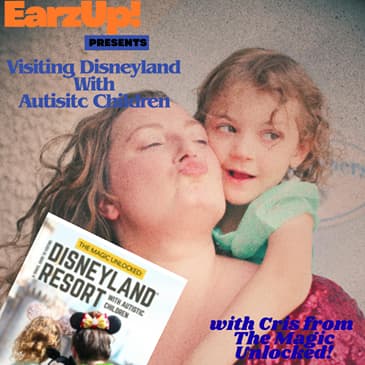
The Disney Parks are a welcoming place for everyone, but that doesn't mean they are easy for everyone to enjoy. Our guest today is Cris Stone, and she has authored several guidebooks on navigating the Disneyland Resort as a parent of two Autistic children. How to prepare, where to eat, the best places to relax and do a bit of self-regulating, and so much more. Get your copies today at TheMagicUnlocked.com
Learn more about your ad choices. Visit megaphone.fm/adchoices
[00:00:02] [SPEAKER_06] It's time for the show that brings the magic right to your speakers. EarzUp! What's going on, everybody? It's a beautiful Saturday morning, 10 o'clock Pacific Time. I should make Eric do the intro. We were complimenting Eric on his Radio Man voice today. He must have gotten a lot of rest last night and he's ready to go.
[00:00:27] [SPEAKER_04] So, yeah, sure am. I think I got a whole, like, I might have even gotten eight hours. This is like a vacation this Saturday.
[00:00:35] [SPEAKER_06] I don't know that I've ever, I think the longest I've ever slept was like maybe seven and a half hours, but that was in surgery. That's about it. That's unfortunate for you. Like, oh, okay, well. That was years ago, man. Yeah, I know. I try. I really do.
[00:00:50] [SPEAKER_00] I'm more of a nine hours person.
[00:00:53] [SPEAKER_06] Minimum.
[00:00:54] [SPEAKER_00] Minimum. I need sleep.
[00:00:57] [SPEAKER_04] Two hours laying there. You wake up and you've got your bonbons and a latte waiting for you.
[00:01:03] [SPEAKER_06] It's not Peggy Bundy. Latte, yes.
[00:01:05] [SPEAKER_00] Latte, yes.
[00:01:06] [SPEAKER_06] Bonbons, no.
[00:01:07] [SPEAKER_00] But bed is like my favorite place. I came straight from bed to this chair. It's the best place.
[00:01:14] [SPEAKER_06] Yeah, I had to carry her. It was weird. She's like, I'm not ready to move. I'm like, I don't care. We have a thing to do. You have to carry me. Carry me like one of your French girls. Yeah. Anyway, what's going on, everybody? Thanks for joining us today. We have a very special guest, Cris Stone. She's the author of a series of books to help parents and caregivers plan the perfect Disney parks vacation with autistic children called The Magic Unlocked. Chris, welcome to the show.
[00:01:41] [SPEAKER_02] Hi. Thanks for having me.
[00:01:42] [SPEAKER_06] Of course. Yeah. You know, when we first were talking, I was like, oh, this is going to be very good. This is a topic we've never really tackled before. We've tackled, you know, vegans and gluten-free people. But, you know, the neurodivergent kind of spectrum is all new to us. So I'm glad that we were able to connect and do this on a lovely Saturday morning.
[00:02:07] [SPEAKER_02] Yeah.
[00:02:08] [SPEAKER_06] Yeah.
[00:02:08] [SPEAKER_02] Lovely. I live in Alaska, so it's snowing.
[00:02:11] [SPEAKER_06] Oh, my gosh.
[00:02:12] [SPEAKER_02] So I have the blindfold down so it's not distracting.
[00:02:15] [SPEAKER_06] Oh, my gosh. You know what? Because we're in California. It's currently 75 degrees in the studio. And that's probably what I would be doing is staring at your window going like, man,
[00:02:24] [SPEAKER_05] that is awesome. Yeah. You're mesmerized.
[00:02:26] [SPEAKER_02] Yeah. So I pull the blind down because I'm like, people who aren't from here, I remember living in L.A. People were like, snow? What's that?
[00:02:35] [SPEAKER_06] It's that white stuff that I think is clouds sometimes way out in the distance in the hills, but I don't know.
[00:02:40] [SPEAKER_02] Yeah. We get it. We get the fluffy stuff.
[00:02:43] [SPEAKER_06] Yeah. That's so awesome. I mean, sometimes we talk about, wouldn't it be great to live in a place that snowed because it's beautiful? And then I go like, well, no, because then you have to go out and do things in it. You have to.
[00:02:53] [SPEAKER_02] And you have to drive in it. Yeah.
[00:02:56] [SPEAKER_06] Yeah. Yeah. I get that.
[00:02:57] [SPEAKER_02] That's the hard, like I was born and raised here. So for me, it's completely normal, but this is a very military heavy area and university heavy area. So we have a lot of people that aren't from snow places that come here and are like, and then you're on the road with them. Yeah. Trying to, like in your car driving. It's okay, baby. It's okay. Just pump your brakes. Steer. It's okay.
[00:03:22] [SPEAKER_06] Don't slam. Yeah. How are the insurance? Like they can hear you. Yeah. Right. How are the insurance rates there? I bet they're sky high.
[00:03:30] [SPEAKER_02] I mean, I'm older and I've lived here for so long. They're not like super bad for me, but I've got a daughter who is going to be getting her permit next year. Oh, that's scary.
[00:03:41] [SPEAKER_00] Not the permit part, but the insurance part.
[00:03:43] [SPEAKER_02] I'm a little, yeah, I'm a little like, the cool thing is, is that you get your permit at 14 here. Oh, wow. Because they want you two years of driving in the snow.
[00:03:52] [SPEAKER_00] Oh, so the permit is for two years. Interesting. Okay. That's cool.
[00:03:57] [SPEAKER_06] Eric's up in Colorado, so he knows. He's familiar. He's familiar with the snow.
[00:04:01] [SPEAKER_02] Yeah.
[00:04:01] [SPEAKER_06] Yeah. We've got tourists as well.
[00:04:05] [SPEAKER_02] Yes. We have those too. We love them. Yeah. We love them. You got to. My real job, I actually work, I work at digital marketing for the tourism sector in Alaska. Oh, nice. So I love my tourists.
[00:04:15] [SPEAKER_05] Of course.
[00:04:16] [SPEAKER_02] But maybe figure out driving in the winter if you're going to come here and drive in the
[00:04:21] [SPEAKER_06] You know what? I love how this is what we're talking about. You know what you need to do? You need to get a driving in Alaska simulator. So anybody who asks for information on coming to Alaska. There you go. You get them. It's just like a Java thing or like a web link. It's just a real easy thing. Yeah. Like, how do you drive in the snow? You get. That's hilarious. $10 off your luggage fees or something like that.
[00:04:40] [SPEAKER_02] That's really funny. And actually, that should totally be pitched to Alaska Airlines because that would be like amazing.
[00:04:47] [SPEAKER_06] There you go. You can have it. I'll get 10% of anything you make off it. I'll let him know next time I see him. That's the deal. Anyway, we're not talking about, well, we are talking about travel, I guess. But what I want to talk with you about is, and we were chatting back and forth, like I said, about what to talk about and how to kind of direct the conversation. And the first thing that popped in my mind is probably the dumbest thing I've said in a long time, which is saying a lot on this show. What is autism? What exactly is going on with that?
[00:05:15] [SPEAKER_06] Because I think it's a broad, I mean, you hear the autism spectrum, but I feel like it's a very broad term that can encompass a lot of stuff. And I want to get it from you. What, you know, what do we, what is it?
[00:05:27] [SPEAKER_02] Right. So first off, that's not a dumb question. I realize that people say that all the time. Like there are no dumb questions. There are. But that is not one. And the reason is, is because most people's knowledge of what autism is, is from like Hollywood and the media where it tends to be very exaggerated, either for dramatic or for comedic means.
[00:05:49] [SPEAKER_02] And the reality is, is that autism is a spectrum because it varies widely on what it is. The big thing to remember, and this is my quick disclaimer, is I'm not a medical professional. I am a mother of two autistic and ADHD children. That's where my experience comes from is the knowledge that I've gotten from our doctors and also from living it. So autism is not a disease. It's not contagious.
[00:06:18] [SPEAKER_02] It's not something that you can either catch or create. It is a disorder that is inherited through genetic markers. So two parents that are what's called neurotypical can have a neurodivergent child because somewhere back in the background, somebody was neurodivergent.
[00:06:39] [SPEAKER_02] The other thing to remember is we call it falling under the neurodivergent umbrella because autism is not the only disorder on there. It also includes hyperactivity. So ADHD is it's formally called and other things that may be under there. I specifically talk about autism because that's what my children have. And that's what my knowledge base comes from.
[00:07:03] [SPEAKER_02] The simplest way that I tell people is autism is just a difference in the way that someone's brain processes information and sensations. Truly, that's really what it boils down to. So so the way to think of it is some people's brains are wired to be extroverts. Some people's brains are wired to be introverts. Some people's brains are wired to be type A. Some people's brains are wired to be free spirits, as we call them.
[00:07:32] [SPEAKER_02] Some people's brains are wired to be autistic. Some people's brains are wired to be typical.
[00:07:38] [SPEAKER_05] Yeah.
[00:07:39] [SPEAKER_02] It's the easiest way to think of it. So many people think it's like like something bad and it's not. It's just a difference in the wiring. So the way that autistic people process information tends to be extremely literal. There's black and there's white and there's no gray, whereas neurotypical people, there's all the colors in there. But the way that autistic people process sensory, you'll hear sensory issues a lot.
[00:08:07] [SPEAKER_02] The way that most of us, like if we put on a T-shirt with a seam, we wouldn't even think about it. We'd go about our day. But their brain processes it as an irritation, constant, constant, constant, constant. And it never stops. So OCD also can fall under this in some forms. So there's a lot of disorders that fall under this umbrella. What we want to tell people is there's no set indicators.
[00:08:36] [SPEAKER_02] So there's no way of saying, oh, that person's autistic because X, Y, Z.
[00:08:40] [SPEAKER_05] Okay, yeah.
[00:08:41] [SPEAKER_02] However, that's why it says it's a spectrum. However, there are some large issues that all autistic people tend to present with. One is communication. Some autistic people are nonverbal and they communicate exclusively using sign language or a device or sounds. Just literally going, ah, my son does it. Other people can speak beautifully and they can communicate.
[00:09:10] [SPEAKER_02] They can have conversations. They are public speakers. They're actors. They are able to communicate as we would see as a typical person. Again, very large spectrum. I have a daughter that speaks beautifully. She can have amazing conversations. Every now and then she gets set on a specific topic. She'll talk about that for a while, which is common in autism. But otherwise, speaking to her, you'd probably never know.
[00:09:39] [SPEAKER_02] My son, however, was nonverbal for the first four years of his life. And through therapy, he can have basic conversations with us. He can tell us how he's feeling. He can tell us what he wants. It's incredible. She goes to school with children that are nonverbal. They communicate using sign language and what's called an ACC. It's a device. And they push buttons and it says the words for them. So they can't communicate.
[00:10:02] [SPEAKER_05] Yeah.
[00:10:02] [SPEAKER_02] Do it differently. Autistic people tend to be extremely practical and logical. Again, that's how their brains work. So they have a hard time with sarcasm sometimes. My daughter will literally ask me, was that sarcasm?
[00:10:19] [SPEAKER_06] Nice, dude.
[00:10:20] [SPEAKER_02] I did it. I did sarcasm. And I'm like, cool, babe. Great job. Nice. I'm really proud of you. Sometimes they can have a hard time with humor because a lot of humor is sarcasm based or it's broad based where there's layers to it. I went to take her to see Hamilton when it came through town.
[00:10:38] [SPEAKER_05] Yeah.
[00:10:39] [SPEAKER_02] And people were laughing at different parts. And at one point she turned to me and she said, Mom, I know I keep asking you, but why was that funny? She didn't understand some of the layers of like the king. She had a hard time understanding the complexity of his character.
[00:10:54] [SPEAKER_06] That's super interesting to have. Something resonates with me about the dynamic of like understanding that you don't get it because of the way that your brain is wired. And then you have to be so present to like sit in that and then be comfortable going, hey, explain it to me so I can understand what's going on. There's something very beautiful about that.
[00:11:18] [SPEAKER_02] Yes. And it's incredible as a parent to know that you've made the safe space for your child to know that they can tell you. Oh, wow. Yeah. And that's whatever I feel like. I feel like I'm the worst parent in the world, which happens four times a day. I'll remember those moments and be like, OK, my kid, my kid felt comfortable telling me that. One of the cool things about autistic people is they tend to be very while they're very literal, it makes them very open.
[00:11:46] [SPEAKER_02] So they tend to be very nonjudgmental. They tend to be very they don't tend to have a lot of prejudice.
[00:11:55] [SPEAKER_06] They don't understand things like racism, which makes sense because it's a social construct that we just decided to create to divide people. And there's no logic behind it.
[00:12:06] [SPEAKER_02] There's no logic and they don't understand it. They literally are so confused by it. But autistic people are very much rule followers because that's the logic. Right. You told me X, Y, Z. That is what we're going to do. That tends to be what they have issues with. They'll get very upset with that. My daughter has a very hard time when people don't follow the rules or when we tell her these are the rules.
[00:12:28] [SPEAKER_03] Same.
[00:12:29] [SPEAKER_02] Schedules are a very big deal and routines are very big. My son is very much a schedule and routine child. Um, so he like if he has a different therapist than he normally has every other day, he has a hard time. If something gets canceled, that was going to happen. He has a hard time. So we have to warn them. Way before. And we'll get into this later. Preparation. Yes. Preparation is everything. So autism is, is just, it's so massive.
[00:12:58] [SPEAKER_02] I could talk literally the entire show about it, but just to give a general idea of you never know what you can't look at a person and go, oh, X, Y, Z, they're autistic. You never know. So give everyone grace.
[00:13:12] [SPEAKER_05] Yeah.
[00:13:13] [SPEAKER_02] And understanding. And, um, if you are the parent or the caregiver of an autistic child that you're going to be traveling with, just narrow down what their things are and cope with those things. And don't worry about everyone else or anything else. So your job is to make their experience magic.
[00:13:33] [SPEAKER_06] Yeah, absolutely. So you knew, you know, before going to Disneyland that your kids were autistic or neurodivergent at least, um, or what did it present on the trip first? Or like, how did you, how did you, you know, kind of figure that out? I mean, with your son, it sounds like it was kind of.
[00:13:49] [SPEAKER_02] My kids were actually what is considered by today's standards, very late diagnosis. Um, we lived in Texas before now and they do not have programs in place for helping with that. No, we had insurance and we were going to doctors and things. Um, people just told us we were bad parents. Oh, wow. I'm not even joking. This is real.
[00:14:11] [SPEAKER_05] I believe.
[00:14:12] [SPEAKER_02] And I was like, okay, man, like we were taking parenting classes. Like we were trying. Oh God. And we moved to Alaska, um, cause I'm from here and we'd always been trying to come back. And Alaska is remarkable. It has a lot of issues, but it's educational system for, uh, disabilities. Is amazing. They have a program here called a first child. It's a free program.
[00:14:39] [SPEAKER_02] You take your kids and they have them do like building blocks and talking and doing all these different things and they observe them. And then they'll come back to you with an assessment of if your child has a disability or a disorder. And my son was three and my daughter was six, which are extremely late. And they were like, boom, your kids have autism. And we also think that they have hyperactive.
[00:15:06] [SPEAKER_06] And we were like, Oh, what was that like as parents to get that diagnosis of like, Hey, it's not you. You're not doing anything wrong.
[00:15:17] [SPEAKER_02] Oh, it is the biggest relief. So it's, it's a mixed bag because one, if you have kids, you don't want any, your kids to have any hardships ever.
[00:15:27] [SPEAKER_03] Right.
[00:15:28] [SPEAKER_02] Right. Yep. We want them to be beautiful and smart and athletic and popular and talented and everything, you know, rainbow shoot out of their butts. This is what we want. So hearing that they are going to have obstacles in their life. It's hard. It's hard. And autism, again, it doesn't, there's no cure. It doesn't, it just is. And so they're going to have it their whole lives.
[00:15:53] [SPEAKER_02] And so that, that's hard as a parent because you're like, Oh, it's, it's going to be hard for you now. That's, that's hard. But as a parent, specifically as parents were told for years that we were terrible parents and that's why our children were acting the way that they did, it was such relief. I actually remember being giddy after we got the assessment being like, Oh, thank you.
[00:16:18] [SPEAKER_02] Like, like, I mean, I'm so happy that it was something and that we wouldn't, it, we shouldn't have not procreated like our kids.
[00:16:29] [SPEAKER_03] Right.
[00:16:30] [SPEAKER_02] We genuinely love them.
[00:16:31] [SPEAKER_03] Yeah.
[00:16:32] [SPEAKER_02] So it was very fascinating. It took two years for them to get formally diagnosed by a doctor. And that's because we ran face first into COVID. And so it doesn't normally take that long for parents that are wondering.
[00:16:45] [SPEAKER_05] Yeah.
[00:16:45] [SPEAKER_02] So we have been to the parks, both parks on each coast, pre diagnosis and post diagnosis. And having done both and knowing that the pre was because we didn't know our children were autistic.
[00:17:01] [SPEAKER_03] Yeah.
[00:17:01] [SPEAKER_02] It's so much better knowing that they are.
[00:17:04] [SPEAKER_03] Sure. Yeah.
[00:17:06] [SPEAKER_02] It's a million times better. I mean, people ask, why do you go to Disney all the time for vacations? And it's because Disney is one of the most remarkable family friendly destinations on earth, on earth for parents of children with neurodivergence.
[00:17:22] [SPEAKER_06] I would think that Disneyland would be just overload. I would feel like you're walking into that place as, as someone with neurodivergence or, you know, autism and, and you're going like, I don't know what's happening, but I guess that speaks to my lack of knowledge about how broad it is, how, how spectrum it really can be. You know what I mean?
[00:17:44] [SPEAKER_02] So yeah, you're, that is a fantastic point. And I actually mentioned it in the book. I say, look, this is a place that is designed to overload your senses, right? They pipe in smells.
[00:17:56] [SPEAKER_03] Yeah.
[00:17:56] [SPEAKER_02] They pipe in every single tiny little detail has been thought out and it has been meant to transform you into a fantasy place, into a magical world. So yes, it is absolutely overwhelming for neurodivergent children. However, as a parent, there is, or a caregiver, there are a lot of things that you can do to prepare them for that.
[00:18:23] [SPEAKER_03] Okay.
[00:18:24] [SPEAKER_02] And also a lot of things you can do in park to help them cope with it. But Disney has, they were one of the first family friendly destinations to have an entire system in place specifically for people with neurodivergence and they are committed to it and they are continuing to educate and train their, their cast members. And also to roll out more and more programs.
[00:18:52] [SPEAKER_02] A lot of them are very quiet. You may not even realize they're there or that they exist unless you need them. And it's such an incredible thing that they've done since Disneyland's opening. Cause my mom literally went to Disneyland within weeks of it opening back when they had wristbands.
[00:19:10] [SPEAKER_06] Oh, nice. Okay. And the, and the big mound of dirt.
[00:19:12] [SPEAKER_02] Some of the things that I've talked about, because we've gone with my, I have massive family and we've gone with like 21 members of my family to Disneyland. No, my mom being one of them. And my family is like, okay, what do we need to know to help your kids? What do we need to do to prepare? And a lot of the things I was bringing up, my mom's like, that's not new. They've had that. That's not new. They've always done that. It's an interesting thing that the story is.
[00:19:41] [SPEAKER_02] And I don't know how historically accurate it is that Walt Disney himself had a niece or a cousin or someone who this was pre knowing what the neurodivergence was, but she was special. That's the way they worded it. And he set up the park, not only for his daughters, of course we know that, but to help her. So a lot of training that the cast members have had since literally the park's opening has been to help everyone.
[00:20:11] [SPEAKER_06] Interesting.
[00:20:12] [SPEAKER_02] And it's morphed from there into the programs that are available today.
[00:20:16] [SPEAKER_06] Can you give me an example of the programs?
[00:20:18] [SPEAKER_02] The biggest one and the most helpful one, and this one is a controversial one lately, is called the DOS program. It's Disability Access System. What people need to know is there are two accessibility programs. There is the standard accessibility program, and that's what a lot of people think of as handicapped. So there's the entrances. You're allowed to stay in your wheelchair. You can use your walker. They will stop a ride to help you transport. Whatever you need, they're there for you.
[00:20:47] [SPEAKER_02] That is people that have physical disabilities. The DOS system is specifically for those with neurodivergence. It is to help them so that they do not have to stand in line beyond what they are capable of doing. That's it. It doesn't mean you skip lines. It doesn't mean you get precedence over other people.
[00:21:11] [SPEAKER_02] It simply is meant as a program to help shorten the amount of time that you have to stand in line as someone who has autism or ADHD. That's all it is. People have confused it with a full accessibility program, and that's not the intention of it.
[00:21:30] [SPEAKER_02] What it is is before you go to Disney, before you walk through the gates, either via a video chat or at the accessibility kiosk, which is located in the Espanade between the two parks, you go up to a cast member and you answer questions, and they determine whether you fall into the spectrum that is covered by their system. They have their own program that they follow.
[00:22:00] [SPEAKER_02] I'm not going to tell you how it's done because I don't know. It's not my job. My job is simply to be the parent that shows up and says, these are my children. These are their issues. This is why they can't stand in line. And then they use their system to determine. My kids are very obviously autistic and ADHD. So when we do the video chats, we get approved usually within minutes.
[00:22:27] [SPEAKER_03] Nice.
[00:22:27] [SPEAKER_02] But I know other people who have had to actually go through a full process and chat. They don't ask you invasive medical questions. Their concern is more, how can we help you if you have trouble standing in line? And it's not physical. Again, it's due to your neurodivergence. So my children get overwhelmed because in those lines, right, they cram us all together.
[00:22:51] [SPEAKER_06] Oh, every time I hear the DAS pass, I think Peter Pan. The Peter Pan queue would.
[00:22:56] [SPEAKER_02] Oh, my God.
[00:22:57] [SPEAKER_06] It flips my lid. You know, I can't imagine that anybody who has sensory issues more than I do, I guess. I don't, I avoid that ride specifically because of the queue.
[00:23:08] [SPEAKER_02] Right. So just so people know, anyone that gets approved for DAS, you do not stand in the main line. You go through the accessibility entrance if you have DAS, just as a heads up. Some of the older rides, the newer rides, they have like the lightning lanes and that's what you use.
[00:23:26] [SPEAKER_06] Yeah.
[00:23:27] [SPEAKER_02] And you use the lightning lane. So however long lightning lane is, is what you're going to use. Like again, you're not skipping. You're just shortening. That's all. But the older rides, the ones in Fantasyland, you go through the accessibility entrance where real care users use. And again, you're not skipping. You're just changing. And a lot of times too with those is you'll still wait. Like we, we've still used the DAS system to shorten their weight and we've still waited an hour.
[00:23:56] [SPEAKER_02] But what happens is if you notice, because I have gone as a, I've gone on my own. So I've gone in the standby line and I've gone with my children. So I've gone in the short lines. The longer lines tend to have a lot more sensory to keep you entertained. Right. Right. While you're standing in the line. Whereas the lanes, they tend to be less. And that's a huge part of it. So it's, it's, it's, again, it's not about like cutting the line.
[00:24:23] [SPEAKER_02] It's about providing less sensory issues for them so that they don't melt down. Meltdowns happen.
[00:24:31] [SPEAKER_06] Sure. It's a shame that people abused that system. And then they really had to kind of tighten it, you know, tighten it up. Eric, I'm sure that you, you know, know about all those changes that happened in the, you know, in accessibility passes.
[00:24:45] [SPEAKER_04] Yeah. You know, Chris, I'd like to hear some of your thoughts on how this all went down. Because it's, there have been so many changes over, over the last few years. And sometimes it's been, they've tightened it. Sometimes they've, they've taken some of that feedback and loosened it up again. And, um, I mean, I've got, I've got family friends who have, have children who are neurodivergent. My, my nephew has Down syndrome.
[00:25:11] [SPEAKER_04] So, you know, I've, I've heard from a lot of people how, how this has affected them and their, their, their trips. And yeah, it's, it's, it's interesting to hear these different experiences lately of, of going through, going through the DAS system and having those interviews. And sometimes it's easy. Again, my, you know, like my nephew, they, they talked to him for a minute and it's like, okay, you're good. Stamp the thing and go on.
[00:25:39] [SPEAKER_04] But other people, it's more of a, you know, well, almost a negotiation in some, some respect.
[00:25:47] [SPEAKER_00] Yeah. We have a fan, we have a friend, um, who went through and did the, I think it's a zoom or something. And she was, they said that she was going to get declined. Her daughter was going to get declined. And she was kind of had to kind of fight back and forth. And, and they were saying that they needed like a physical diagnosis or something. And she didn't feel comfortable providing that. And so it was like this whole thing.
[00:26:11] [SPEAKER_02] It's the frustrating thing is this is an incredible program that Disney created to help have all of their guests have a magical experience. And some people used it and now we all suffer. That's really what it comes down to.
[00:26:27] [SPEAKER_03] Yeah.
[00:26:27] [SPEAKER_02] It's not Disney. Right. It's the people that abused it. And I know I had one experience where I watched someone abuse it.
[00:26:37] [SPEAKER_03] Oh, no.
[00:26:38] [SPEAKER_02] I literally had a family in front of me. They were very calmly waiting, calmly waiting. We get up to where you use your magic band, you know, go in. And the mom leans over and tells the son, okay, act autistic now.
[00:26:53] [SPEAKER_03] Oh. Oh my goodness.
[00:26:54] [SPEAKER_02] And he pretended to stim. And here I am standing with my two actual autistic children who I have been keeping calm while we stood in this very long line to even get to the point where we stood in line. Right. And I, my husband had to physically put his arm around me.
[00:27:14] [SPEAKER_05] Absolutely.
[00:27:15] [SPEAKER_02] He just pulled me in a bear hug.
[00:27:16] [SPEAKER_05] Yeah.
[00:27:17] [SPEAKER_02] Because I was like, oh my. And that was a month before they said we're doing widespread changes. We have to do something here. And again, it's not Disney. They want to help. They're trying to help. It's the people that abuse it.
[00:27:33] [SPEAKER_03] Yeah.
[00:27:34] [SPEAKER_02] So you can be like me where I am in my Pete Karen era. And I calmly and quietly pulled the cast member aside and said, this is what happened. The child may actually be. I'm cool. Again, I don't judge.
[00:27:51] [SPEAKER_03] Right.
[00:27:52] [SPEAKER_02] But the timing was suspect. And the fact that as soon as they went through, he stopped.
[00:27:58] [SPEAKER_05] Absolutely. That's the minimum you should do. Yeah, absolutely.
[00:28:01] [SPEAKER_02] And the cast member, apparently they discreetly have a system in the background. I don't know what happened. I just know that I was like, okay, this is like a no-go. Yeah. Because not only are you abusing the system, but what you're doing is offensive to my children's disability. Yeah.
[00:28:17] [SPEAKER_06] Absolutely.
[00:28:18] [SPEAKER_02] Yes. Absolutely.
[00:28:19] [SPEAKER_06] Well, we actually have that family on the line. We'll bring them on now.
[00:28:22] [SPEAKER_02] Like you're doing the stereotypical, uh, you know, and here's my kid behind you actually doing it because he's actually trying to self-regulate.
[00:28:31] [SPEAKER_05] See, and I want to add.
[00:28:32] [SPEAKER_02] So for those who don't know, stimming is where autistic people use verbal sounds or hand movements or body movements to calm themselves. So frequently it's this, or you'll see, if you watch Carl the Collector on PBS, he does this to stim.
[00:28:48] [SPEAKER_06] Finger taps.
[00:28:48] [SPEAKER_02] My son's a big fan.
[00:28:50] [SPEAKER_06] Yeah.
[00:28:50] [SPEAKER_02] Or my son does vocal where he sounds, he sounds like the guy from Goonies and goes, just goes all the time. Yeah. It's how he calms himself. And we laugh and we all do it with him. Yeah. With him.
[00:29:03] [SPEAKER_06] Give him a baby.
[00:29:04] [SPEAKER_02] He'll include it. So.
[00:29:06] [SPEAKER_06] Yeah. I think it's great. It's funny. Like my, my, my last therapist, uh, was a somatic therapist and she used, uh, you know, she would teach me techniques of basically stemming like that, where you do taps or you tap on your head, certain, certain places on your face and all the kind of, and it really does work.
[00:29:24] [SPEAKER_05] It works.
[00:29:25] [SPEAKER_06] It stimulates that nerve, that Vegas, the Las Vegas nerve or whatever it is. And like, it can really, it can really chill you out. So I can't imagine what it would do to somebody who is like really in overdrive in that sensory kind of place. That's crazy. Well, I want to go. Go ahead. Oh, sorry. No, no. This, look, uh, remote interviews are tough, you know, cause we're, we're, we're talking over each other, uh, and it happens and that's good. That means we have a lot to say.
[00:29:54] [SPEAKER_06] Um, I want to get your take real fast and then, and then I want to get into more Disney stuff, but like, what's your take on how, you know, Hollywood TV movies has either, uh, improved or, or kind of tarnished, I guess, for lack of a better word. Um, autism, the label of being autistic or whatever. I mean, cause you have movies like rain man, right. Which are relatively positive. You know what I mean? I mean, uh, you know, it was a beautiful movie, but then you have other things that you, maybe
[00:30:24] [SPEAKER_06] they're, I don't say they're villainous, but they're a burden and they're, or they're over exaggerating for dramatic purposes. Like we were talking about earlier. Is, is that something the kind of community, the neurodivergent community, I don't know, talks about or feels an impact from, I don't know if my question is making sense.
[00:30:41] [SPEAKER_02] No, it makes total sense. And yes, the answer is yes. Again, Hollywood has done some amazing, we use Hollywood as the general term, has done some incredible things for getting autism and neurodivergence out so that it's normalized. Right. Right. Cause for forever, it's existed forever since the beginning of time, whether people want to acknowledge it or not, it has.
[00:31:03] [SPEAKER_03] Right.
[00:31:03] [SPEAKER_02] And it's only been in the last few decades that they've started tracking it and understanding it, researching it. And so to normalize it, we have to see it, right? That's why we say representation matters. Right. So in the beginning, rain man was the only reference. And even though the movie definitely by today's standards has some problems at the time, I remember I was actually a nanny and a daycare worker at the time.
[00:31:30] [SPEAKER_02] And I remember for several of my children, all of a sudden we were able to go, oh my gosh, oh my gosh, we could see, and we could go to a doctor and say, have you seen rain man? Let's get into this. So it was extremely helpful at the time. And now we've gone out and now we're at the point where we see characters and go, are they? And it's never fully acknowledged. For example, as a really big show, the Big Bang Theory, right?
[00:31:58] [SPEAKER_05] Oh, sure.
[00:31:59] [SPEAKER_02] So they never formally acknowledged that he was autistic. However, the actor said, I played him as such because that is the way he felt to me. But I chose to do it in a very respectful manner. And if you watch it in the comedic sense that it's built around, it is still respectful to the disorder, right? Like we should have known my daughter was autistic. When she was a baby, she screamed.
[00:32:27] [SPEAKER_02] She never stopped screaming ever for the first three years of her life. The only thing that would get her to go to sleep was Sheldon's voice. Wow. She fell asleep to Big Bang Theory. I'm not even joking. This is like an ongoing joke my husband and I have about her.
[00:32:43] [SPEAKER_06] That's so awesome.
[00:32:44] [SPEAKER_02] But other ones, it does become problematic. So here's the thing. Autistic people are good people and there's evil people, just like people, right?
[00:32:54] [SPEAKER_03] Right.
[00:32:55] [SPEAKER_02] So there's good people in a wheelchair and there's bad people in a wheelchair. There's good Catholics and there's bad Catholics. You know what I mean? Like there's good white people and there's bad white people. Like it's just, that's the way the world is. So there are autistic people who have chosen to not be good people. There are many autistic people who are just out there living their lives.
[00:33:20] [SPEAKER_02] So when it shows up in a TV show or radio or movie or whatever, and it's an autistic person and they use the autism as the reason that they've chosen to be a bad person, that seems to be where the problem stems as far as people getting upset. If someone is autistic and they just happen to be a bad person, that's, you know, they chose. That was a choice that they made. Right.
[00:33:49] [SPEAKER_03] Right.
[00:33:49] [SPEAKER_02] Like we know people who have been abused who choose to not be bad people because of it. Yes, we all have things that we're coping with and we have things that we're dealing with. But when it comes down to it, it's the choices that you make. So I think that's what's frustrating. When it comes to Disney and the Disney umbrella, I will say that one of the best characters that they have ever done that resonated with autistic people was Drax from Guardians of the Galaxy.
[00:34:16] [SPEAKER_05] That's Drax.
[00:34:17] [SPEAKER_06] Okay. Oh, okay. Okay.
[00:34:19] [SPEAKER_02] He resonated and then they bought in Manta, right? And they resonated so hard with the autistic community. They are, my daughter is dying to meet the actor. Like if she ever got a chance, she would just lose it because she was like, Mom, he's like me. He doesn't get jokes. Yeah. Like it resonated and they took everything so literally. And my daughter was like, these are my people. I love them. These are my people.
[00:34:46] [SPEAKER_02] You know, so it is complicated and it's an issue that I, the more we see more people who have been diagnosed and have lived their lives knowing that they're autistic go into the entertainment industry. The more nuance we're going to see. The very cool thing about millennials is, I'm a zillennial. I'm just a little micro group that's above you. Yeah.
[00:35:09] [SPEAKER_02] Um, but is you were the very first generation to formally be diagnosed from a young age.
[00:35:18] [SPEAKER_06] Yeah. Well, no, I'm, I'm Jen, I'm Jen X. So yeah. So don't, don't lump me in with these young kids.
[00:35:24] [SPEAKER_02] Yeah. I'm an older parent. So I've watched it now. Yeah. So what I always say is, uh, millennials laid the foundation for the world to live with neurodivergence is a normal thing. Because I, I have watched millennials have to go through all the therapy and figure out what they're now. They're adults. And they're like, this work, this did not. And now they're revamping the way that they do things and the way they test and all kinds of things.
[00:35:50] [SPEAKER_02] They're the ones who had to go into the workforce and go, y'all need to make some changes here.
[00:35:55] [SPEAKER_06] Right. And it's funny how much the boomers have pushed back on that and go like, oh, because, well, you know, you didn't have it as hard as we did. So you don't get this thing. And then, and then they're surprised when, you know, there was like an article recently about, uh, you know, children who cut off their parents who go no contact with their adult parents. And it's like, but this is why, because we're trying to tell you that something's wrong or we don't like something. And you're telling us just to push through it and it doesn't matter.
[00:36:21] [SPEAKER_06] But if you're not listening, then we now have the ability to choose whether or not to talk to you. And it's because ironically of the sixties and seventies, when you did the same stupid thing to the government, you were burning your draft cards, burning your bra, like doing all this stuff. And it's like, and then now suddenly like, but my, my, you know, I need grandparents rights because my, my daughter cut me off and now I can't see my grandkid for two months. Like, what do you, yeah, I don't know.
[00:36:49] [SPEAKER_02] It is. It's very frustrating. I'm very lucky that our families are, uh, very open. Um, my husband's side of the family, um, our niece has what's considered to be more of an extreme, uh, on the spectrum. Um, there's levels, level one, two, and three. My daughter is one, my son's two, our niece is three.
[00:37:11] [SPEAKER_03] Oh, okay.
[00:37:11] [SPEAKER_02] So she, um, we were there when she was growing up and we watched the family adapt to it. And they kind of did this. They did. She's a millennial. So they were doing it in real time. They were fighting the system in real time. Luckily, everyone in the family just went, this is our baby girl. And they just embraced it and went with it. My family, once my kids, my, they were supportive of my children beforehand. Once they got diagnosed, then they were super supportive. Talking to all the cousins, making sure everybody buying the books, making sure everybody understood,
[00:37:41] [SPEAKER_02] making sure that they accommodate my children in family traditions that don't work for us. Um, so we are very lucky that we are from very loving families who are like, cool. Yeah. All it is disorder. That's it. That's all it is. But some people take it as personal. Again, there are people who think it's someone's fault or you did something and they take as a personal insult to themselves. Well. And they react out of fear.
[00:38:07] [SPEAKER_06] Well, you were taking clearly too much Tylenol. I think that's really.
[00:38:12] [SPEAKER_02] No. Oh gosh.
[00:38:14] [SPEAKER_06] No. Yeah.
[00:38:15] [SPEAKER_02] Um, so they, um, I see a lot of it as just fear and I see a lot of it too, as we have this weird thing that some people do that never made sense to me of again. And I talked about it before, right? When we have children, we want them to never have to suffer. We don't want them to be inconvenienced. Right. But we have kind of a group of people who think that because they did, you have to.
[00:38:41] [SPEAKER_03] Yep.
[00:38:41] [SPEAKER_02] So like I had student loans that like we had to eventually, because I had already paid them four times over and still owed more money than I took out.
[00:38:50] [SPEAKER_03] Yep.
[00:38:51] [SPEAKER_02] After over a decade, we had to take cash out of mutual fund to make it just be done. I don't want anybody else to have to do that. I suffered. I don't want you to suffer. Right. Right. So I watch my children have to deal with things and I don't want them to have to deal with those things.
[00:39:07] [SPEAKER_02] So whenever possible, we step in, we have an IEP for school and individualized education program, which is a program in public schools in America that helps make alterations for your child that has special needs. Um, I participate in committees that we have here. I make sure I'm on committees for choosing new staff members because I want to make sure special needs parents are represented. Uh, you know, I do all these things because I don't want anybody else to suffer. I fight so you don't have to.
[00:39:37] [SPEAKER_02] Right. I create a travel series so you don't have to. Again, I always call it raw dog in it. You can go with the tools that you need and you can prepare yourself for what you need to know.
[00:39:49] [SPEAKER_06] Yeah. Well, I'll tell you what, on that note, let's take a break. Uh, and I want to come back. I don't want to keep you all morning. Uh, it'll be noon soon. We'll have to break for lunch, but, uh, let's take a break. When we come back, let's get into more of the nuances about going to the Disney parks. I think we've, uh, you know, we've, we've covered a lot of, you know, what it is, what it means to be a parent with a child, uh, to a child with autism and, and, and a friend and a family member and how, you know, you can kind of help their lives be a little bit, you know, better if you're a nice person.
[00:40:17] [SPEAKER_06] Um, and then we'll come back and we'll learn about what it takes to, to go to the parks because just because, you know, your, your children need a little bit of extra care doesn't mean that they can't have fun. So let's do that. Everyone hang on real fast. We'll be right back. It's ears up. Don't go anywhere.
[00:40:39] [SPEAKER_03] Back to ears up where the opinions never stop ever.
[00:40:45] [SPEAKER_06] All right. Thanks for hanging on everybody. We are back with Chris and we're talking, going to Disneyland. Now, maybe let's start with your, your, your children's diagnosis, uh, with autism. And then you were talking about the comparison beforehand. Uh, what is different? How do you, how do you now plan a trip to Disneyland?
[00:41:03] [SPEAKER_02] Um, you know, the big difference is it's so much more magical for us now. Um, before we, when we would go before my kids were diagnosed, we had to limit ourselves quite a bit. We did a lot fewer hours in the park. We had to be very particular about what time of year we went, what time of day we went. We were constantly gauging crowd sizes and lines.
[00:41:28] [SPEAKER_02] We couldn't do any line more than 25 minute wait, which truly limits what you do.
[00:41:33] [SPEAKER_06] I'm telling you, I think I might be autistic. This is exactly my trip. That's my ideal trip now.
[00:41:41] [SPEAKER_02] Like, I mean, me too. I'm very much like not a line person, but I can do it.
[00:41:45] [SPEAKER_03] Yeah, that's true.
[00:41:47] [SPEAKER_02] But for my kids, they literally could not. They can. And we, uh, we struggled with food because we'd be like, oh, let's go eat here. And we would just sit down and then go, oh, there's nothing on the menu that you'll eat. And then we would try and get them to try things. Whereas now we know autism sensory, oral sensory is a very big deal. And textures and food types and things like that are a very big deal to autistic people.
[00:42:14] [SPEAKER_02] And now we pre do the menus. We know where we can eat. We know who's serving what. There's an entire section of my book, my guidebook, where I literally show you photos of and run down all of the common autism foods in each park, in each land, in each restaurant. Wow. And I tell you where they are. That's amazing. I have a chart that runs down. And then I also have it written out for those who need that.
[00:42:42] [SPEAKER_02] And I tell you if there's sit down, buffet, table service, quick service, mobile order, so that you can do that. Another cool thing is between the times that we started going to the parks and where it is now, they have increased what you can do via their app, which has been extremely helpful.
[00:43:01] [SPEAKER_02] And I feel like a huge portion of that was, yes, the general population, but I really do feel like it was them starting to pay more and more attention to what people with neurodivergent needs require. So mobile ordering started small and it's grown and grown and grown. Mobile ordering is one of the best things that you can do if you have autistic children.
[00:43:21] [SPEAKER_05] I love mobile order.
[00:43:22] [SPEAKER_02] It's mobile ordering is the best, man. We stand in line for the ride we're going to do before it. I mobile order. We get off the ride. We get our food. Classic. I put, as soon as we get off, I click, we're here. They make our food. We show up. It's fantastic. But the really big thing for, since I'm talking about food, we'll just continue on that line. Yeah, sure. Is that you need to know that Disney has very set food.
[00:43:49] [SPEAKER_02] So the type of French fries that they have, they used to have the crinkle kind. And now they have what's more of like a, not quite the steak, but like the thicker natural cut is what we'll call them. So if your kids will not eat that, you know, not to order the fries because you know they won't eat it. I love the photos.
[00:44:06] [SPEAKER_06] I think that is such a, because I think most people like myself included would do a chart or just write it out. But the photos is such a good idea because it's, it's a, it's a very targeted thing of like, I understand you as a parent of an autistic child or a caregiver of an autistic child. So I need to make this as simple as possible for you. I think that's, that's a great, that's a great addition.
[00:44:31] [SPEAKER_02] So one of the questions that I got when I first was talking this prop, this idea out loud that I was going to make guidebooks for parents with autistic kids travel. And it was, well, why they can just get it online. So when I started looking, yeah, you can, but it's 14 places you have to go to, to get one answer.
[00:44:52] [SPEAKER_05] Sure.
[00:44:52] [SPEAKER_02] I put it all in one spot for you where it's all there. And because autism is genetic, right? I put it in two different ways for just in case you're also neurodivergent and you can go exactly the way that you need to look. So if you're a chart person, awesome. There's a chart, super easy to read, runs down. If you're a word person who also needs photos, I also have that right next to the charts.
[00:45:20] [SPEAKER_02] It's right there for you and it's throughout the book. You both. I have it for the sensory triggers that could be on the rides and attractions and events. I have it for Disney's unofficial sensory areas since they don't have official ones. I have that rundown for you where I have a map with them located, but I also list them.
[00:45:39] [SPEAKER_06] Tell me about that. What's the unofficial sensory? Cause that's the thing I want to talk about is, is we were mentioning at the top of the show, the sensory overload that I would consider Disneyland being, but are there cool down areas that you can go to within the parks that aren't official, but you know, are a little more chill.
[00:45:57] [SPEAKER_02] So Disney is awesome. And they've acknowledged the fact that they do not have official sensory areas. I think like most parents, I'm hoping that they go in that direction, but I can again, see where it could be abused. So they're trying to figure out, you know, how to do it. But in the meantime, there are lots of little pockets that you can find in both parks that you can go to. Um, one is really, really popular.
[00:46:23] [SPEAKER_02] One, um, is at the very, very back of Toontown in right next to the coaster.
[00:46:30] [SPEAKER_03] Yeah.
[00:46:31] [SPEAKER_02] There is a little like Canyon space with like fake Astro turf. And if you walk in there, it mutes all the sounds.
[00:46:39] [SPEAKER_03] Wow.
[00:46:39] [SPEAKER_02] And it's very quiet. It's much quieter in there and there's benches and there's just like this big. Um, empty area kind of, um, where that's a fantastic place. We use it all the time. We go there all the time and do that. Another one is the walkways on, uh, to go in on both walkways for a galaxy's edge.
[00:47:03] [SPEAKER_05] Oh yeah.
[00:47:04] [SPEAKER_02] You go into the tunnel thing. So usually there's no benches and there's usually like a little pop-up car with stuff. Yeah. But otherwise, other than people doing that or taking photos, it's quiet. They start to dim the music from fantasy land or frontier, whichever way you're coming in. And they start to very quietly do the music for galaxy's edge. But in that tunnel where it's like a Canyon tunnel kind of a thing, it's quieter and it's a little darker.
[00:47:34] [SPEAKER_02] So it's a good place. If you don't mind sitting on the ground to go there. Same thing with, um, California venture that kind of that back part of cars land where you can go into, um, behind the San Fransokio and you can do that part.
[00:47:51] [SPEAKER_06] Oh yeah. Kind of on the side of flows.
[00:47:53] [SPEAKER_02] The back connecting thing.
[00:47:54] [SPEAKER_06] Yeah.
[00:47:55] [SPEAKER_02] That's another one. It's the thing. And for the life of me, I can't, I tell people about it all the time and I can't remember what it connects to right now, but it goes around the backside. Yeah. Right. So it's also another one. People just use it to walk from one place to the other and they use it to bring down one land and go up to the next. So there's like a little sweet spot in there where it's a little quieter, no benches, but you can just kind of like chill and hang out. It's a really good spot there too.
[00:48:22] [SPEAKER_02] So all the parks have little tiny places that aren't formal, but they'll work. So I have them too. And I have them listed and I'll say, Hey, this one's a great one. And then I'll have this one. We'll work in a pinch if you need to. One of the cool ones though, is if you are a Disney vacation club member, I discovered this because my good friend Whitney is a vacation club member and she happened to be with me and my kids one day. And she said, let's go in the lounge.
[00:48:47] [SPEAKER_02] And we went in, there's a formal lounge in Tomorrowland at next to the star Wars Bay. That is literally an entire floor that it is. I don't know if you've been in there, but it's like quiet. They have their own bathrooms. They have snacks that are free. My husband would like to point out they have coffee there because that's his go-to. And they have lots of couches and chairs and tables.
[00:49:17] [SPEAKER_02] And they have the cutest little kids area where they have those 1960s egg chairs. And my kids love, they will get in those and they will curl all the way up. And there's like a TV that very, very quietly shows a cartoon. It's very quiet. And they will just sit there and they will self-regulate and they will get their sensory back to where it needs to be. And it's an incredible spot over there.
[00:49:45] [SPEAKER_02] At Disney California, they have that in the wine country. They have like a balcony area and it's more of a bar, but it is quiet and it is restrictive to, it's family friendly and it's restrictive to only the DVC members. So it's not as quiet as, and, and, and have as many options as the lounge does over in Tomorrowland. But it is an option if you're a DVC in California Adventure.
[00:50:14] [SPEAKER_02] It's above the wine bar. And you actually like, there's like an elevator and you take it up there and it's, it's much quieter.
[00:50:21] [SPEAKER_06] I always thought, you know, when, when we went to the parks with our kid several years ago, we, I was blown away by the quality and, and, and the calmness of the, uh, like the nursing rooms.
[00:50:33] [SPEAKER_02] Oh yeah. That would be nice. Those are fantastic places.
[00:50:36] [SPEAKER_06] Yeah. That would be nice if you guys could get access to some of those too, because there's hardly anyone ever in there.
[00:50:41] [SPEAKER_02] So you do.
[00:50:42] [SPEAKER_06] Oh, okay. Good.
[00:50:42] [SPEAKER_02] Um, the, the baby centers and first aid centers, if they do not currently have people who are using them for their originally intended need, they will actually, absolutely let you come in there and let your children self-regulate in those spaces.
[00:50:57] [SPEAKER_03] Wow.
[00:50:57] [SPEAKER_02] Um, also they have microwaves. Um, and if they're, again, not being used by parents who need them immediate need for their babies, um, they, if you have to bring your own food, which you're allowed to do at Disney. So if you have a child who, for example, as a friend of mine, um, only will eat chicken nugget, uh, contain chicken nuggets from McDonald's in a chicken nugget container, literally the only thing that they'll eat. Um, and they have to be warm.
[00:51:25] [SPEAKER_02] Uh, we'll, we'll very kindly let you go in there and warm them up. If you need a moment. Um, the key is to, to go in and be very polite about it and say, Hey, I realize this isn't the purpose, but my child, uh, needs to self-regulate or I need to keep this up because they're autistic and they'll, they're there to help. They want to help. They will literally chase you down to help you. My niece had an issue where she needed to use a bathroom and she was using the app and she kept walking back and forth and back and forth. And she realized it was inside the first aid station.
[00:51:54] [SPEAKER_02] So she was like, Oh, I'm not going to go in there. Right. They're helping people. And they literally came out and chased her down and brought her back in to use it. And then she happened to need the nurse. So they were like, just sit here. We're not busy.
[00:52:07] [SPEAKER_05] We're bored.
[00:52:10] [SPEAKER_02] So they're not busy. They absolutely. And they have the cutest special nurse mini stickers there. If you go to a first aid station, just so you know. Um, so if you're a nurse or a medical professional, very cute. And she, uh, her sister is an RN at the emergency room. So she got her one.
[00:52:27] [SPEAKER_03] Nice.
[00:52:28] [SPEAKER_02] Um, so there, again, Disney wants to help you. The staff is trained to help you. The issue comes when you abuse it or as with everything, uh, if you're rude and entitled, people are less inclined to help you even if that's their job and they want to.
[00:52:43] [SPEAKER_06] I think, and I think that's where a lot of people, you know, I'm chronically online. So I'm getting like the Disney subreddits and all that kind of nonsense. And a lot of people, I think their issues whenever they post about their issues, it largely, in my opinion, stems from 80, 20, maybe. Um, the attitude that you have when you approach the subject, when you approach the cast member with a problem, you know, you're, it's probably hot. You're hungry. You're tired.
[00:53:13] [SPEAKER_06] You've been fighting crowds all day. And maybe you have a little tone in your voice, you know what I mean? And it's not going to get you anywhere. And I feel like, uh, in this conversation, even if you're not neurodivergent, you can learn a lot from self-regulating, calming the hell down. And then, and then, and then explaining your issue to the cast member. And then I think you'll get a lot, a lot more out of it. Um, I don't know. I feel like that's, that's just in, in general.
[00:53:39] [SPEAKER_06] I feel like, you know, you, you always, you can tell the people who've never worked in retail because they will just address you in the worst possible tone. Like you're there specifically for their needs. It's like, I got 25,000 other people to help too. So leave me alone.
[00:53:53] [SPEAKER_02] I have to tell you that I love the cast members and guest services at Disney so much that I actually dedicated the book to them.
[00:54:00] [SPEAKER_06] Oh, nice dude.
[00:54:01] [SPEAKER_02] That's because we have had minor issues and we've had major ones that involved like going to the main office and doing all kinds of stuff because of things. Really? And at all times we remained calm and we remained friendly and they bent over backwards to help us.
[00:54:24] [SPEAKER_03] Yeah.
[00:54:25] [SPEAKER_02] Because that's their job is they want to make it right for you. They want to make it magical for you, but the only way they can make it right for you is if it was actually wrong in the first place.
[00:54:36] [SPEAKER_03] Right.
[00:54:36] [SPEAKER_02] Right. You know what I'm saying? So going and complaining that it's raining, they can't, they can't control that. No. They can't control.
[00:54:46] [SPEAKER_03] No.
[00:54:46] [SPEAKER_02] If you showed up, you walked through the gate, used your pass to walk through the gate, and then your kid promptly vomits everywhere. They'll come over and help you and they'll try and make everybody feel better. And they really will. You know, they're going to help with the things that they can actually help with. The things that are actually wrong and not just unfortunate or an inconvenience. There's a difference between a problem and an inconvenience is what I always tell my kids. Yeah.
[00:55:14] [SPEAKER_02] You know, we use the system to stand in shorter lines. It's inconvenient if the line is still one hour long. But the problem of the three-hour line is not something we have to deal with anymore.
[00:55:30] [SPEAKER_06] Right. And I feel like just in the, I don't know, the act of being open for business and the fact that they are a family-targeted place for entertainment, they have themselves in a little bit of a conundrum with, you know, kind of modern sensibilities where we feel entitled is probably the best word, even though, you know, it might be a little too pointed. But we expect everything to be perfect for us.
[00:55:57] [SPEAKER_06] We expect Disney, the company, to make everything magical for us because we've developed this sense of, you know, I don't know, this parasocial relationship with a physical location where we go, well, I'm spending all this money. So if it's raining, I want my money back because I can't have a good time. But that's not how it works. You can't do that. So you go in with this weird sort of like twisted reality of like everything needs to be.
[00:56:24] [SPEAKER_06] And Disney, the Disney parks have, I think, encouraged that to not encourage it, but have built into it a little bit because, oh, your magical fantasies, it will help you. But they help one or two people. Those people go online, they post about it, like with the whole getting a dress coded thing. You know, and that was a big fad where it's like, well, I wore this bikini and I got a free shirt for 50 bucks. And then everyone started doing it and they can't do it anymore.
[00:56:50] [SPEAKER_02] And I've actually addressed that in my book too, that I'm like, they don't do this anymore. Stop it. They will literally just tell you to turn around and leave and come back when you're dressed appropriately.
[00:57:01] [SPEAKER_05] I love that.
[00:57:02] [SPEAKER_02] Like it's, it's the whole thing. I think what happened is a lot of these policies were done pre social media and internet. Yes. And like, like the laws in our country, they're just desperately playing catch up and they're trying to anticipate where things could go. There were a lot of really wonderful little hidden fun little things that you could do in the park that ended up on TikTok.
[00:57:27] [SPEAKER_02] And now they've been removed completely because everybody on the planet tried to do it. We, of course, know some things have been ruined because people are just trying to film a video. In, in some ways, social media has been incredible. When we were navigating this journey of finding out that there were programs for our kids and there were things for our kids. I use social media and, and the people who are, who are trying to help with that as I am.
[00:57:54] [SPEAKER_02] And I use a lot of it to try and figure things out and, and to talk to people who had experienced before. But then there's people who are using it to abuse the system. And again, it's, it's, I, again, I tell people it's not Disney. It's the people that are trying to abuse it.
[00:58:09] [SPEAKER_03] Yeah.
[00:58:10] [SPEAKER_02] They really are trying. They're a business though. They're a massive corporate, massive corporation that are trying to figure things out.
[00:58:17] [SPEAKER_06] If you doubt that, read the Bob Chapek book. I finished it. It's an amazing, but not amazing. It's a great book. It's good insight. But it, it mainly because it proves my, you know, my personal reality of like these people that run the company are profit first, but they also do care.
[00:58:35] [SPEAKER_03] Yes.
[00:58:36] [SPEAKER_06] About, about your experiences. You know, Chapek talks about how, you know, he had to, he kind of rearranged the pricing in 2015 for the passports and stuff. And he's like, I was walking the parks and I noticed that midday we would have to close the gate sometimes because people were just coming in. People who were coming from Ohio for the first time in five years can't get the good experience. So we had to rearrange things to make it better for everybody.
[00:59:05] [SPEAKER_06] Unfortunately, the only way to do that was this to raise the prices. And then people still hate on him for that and still hate the company for that. And someone online the other day was like, I don't know why Josh tomorrow didn't undo everything Chapek did. It's like, what are you going to lower prices? Get out of here.
[00:59:21] [SPEAKER_02] But you, you, Josh has a lot on his, I've been very lucky. I've met Josh pre CEO several times. He used to work with bloggers and I had, I had the privilege of doing several events with Disney as a blogger and got to meet him. And, um, he may have changed. It may have just been the face that he had at the time. You know, I'm not going to put this as a, an iron, like I know him.
[00:59:47] [SPEAKER_01] Sure.
[00:59:48] [SPEAKER_02] But when I met him, he was very focused on how people at Disney interacted with Disney.
[00:59:57] [SPEAKER_03] Yeah.
[00:59:58] [SPEAKER_02] He wanted to know, how do you feel about this? How do you feel about that? How do you like that? He was very concerned about our experiences, um, as people who went. And I am the kind of person that even if you are inviting me to your event and you're paying for me to stay there and you're paying for me to get VIP access and stuff, I'm still going to tell you the truth.
[01:00:22] [SPEAKER_05] Absolutely.
[01:00:23] [SPEAKER_02] He knew that about me. So he would come find me a few times and be like, oh yes, that's the lady. He never remembered my name, which is fine. But he'd be like, you, I remember you because you will tell me. And, um, and I, so I was able to tell him a couple of times, like, Hey, this was great. Or I don't know if this was just a one-off thing just so you know this. And, um, and he would listen.
[01:00:44] [SPEAKER_06] Um, well, I think that's what CEO.
[01:00:46] [SPEAKER_02] And again, I've only met him a couple of times, probably a total of 15 minutes for all three times. I met him, you know, but I, I'm interested to see the direction that it goes because at least my experience with him was he truly did care about how people experience.
[01:01:01] [SPEAKER_06] Well, and in, in the book, now it's a chapek glazing session, but like in the book, you know, he's like, I didn't do base. I'm paraphrasing because I didn't do anything without research, without data. And, you know, kind of going back to what we were talking about earlier about, uh, you know, uh, rules and structure and whatever. And he seems very much that analytical data driven logic kind of thing. If it's bad for the company, I'm not going to do it.
[01:01:28] [SPEAKER_06] And that's first and foremost, legally, he has that obligation, but he was, he was like, I would ask people, I would do the surveys. I would pull the data to reinforce that this is a good thing for the people. And, you know, he kind of brought Josh up. And so it sounds like there's that, that I guess the only thing I'm saying is I'm making the point of like the company as a whole and its leadership wants the best for everybody. Right.
[01:01:55] [SPEAKER_06] And sometimes that kind of makes one thing get lower and other thing get higher. But for the most part, it all comes out in the wash. And I love the fact that it's not just targeted for, uh, neurotypical people, right? Where, you know, I think a lot of places you wouldn't get that inclusion. We talk about inclusion a lot where inclusion matters. It matters to see yourself represented. It matters, uh, to have a space, even if, even if 2% of people use it, it doesn't matter. Right.
[01:02:24] [SPEAKER_02] The fact that they have 2% of the people will appreciate it. Huge. They're people too. Um, what people need to remember too is Disney again was the leader in inclusive areas and representation. Um, if you look at the other theme parks and when they started to include things and started to do create programs, it was after Disney truly started theirs.
[01:02:50] [SPEAKER_06] Yeah, I believe it.
[01:02:51] [SPEAKER_02] Disney may not have brought it out until after they did or rolled it out, but they were working on it beforehand because I did a lot of research on this book to make sure that my information was accurate.
[01:03:01] [SPEAKER_03] I appreciate that.
[01:03:02] [SPEAKER_02] And, um, and, and the other thing I'd like to point out is at other parks, um, Disney does not always require, they may now, sometimes they don't require you to provide an actual like doctor's note or an actual diagnosis. Other parks do. They will delve into your medical history. And Disney tries not to. They're trying to do everything they can to not do that because it's invasive. Right.
[01:03:30] [SPEAKER_03] It's private. Yeah.
[01:03:31] [SPEAKER_02] They are technically allowed. I talked to a lawyer about it and she said, legally, if you ask for accommodations at work or at a park or whatever, or at school, you have to provide a reason. There has to be a reason. Sure. You have to prove it. Yeah. So sometimes it's formal. And she said, sometimes it's not. She said, but they are allowed to say, why do you need this? Prove it. Like they're legally allowed to do that.
[01:03:58] [SPEAKER_02] And they are trying to do it in the most, the least invasive way that they can.
[01:04:03] [SPEAKER_05] Respectful. Yeah.
[01:04:05] [SPEAKER_02] Yeah. Most respect. I have had nothing, but again, my kids are within five minutes, you pretty much know my kids are neurodivergent. Um, so I've had a very good experience with them. Um, but I do have a nephew that had, he came back from employment right before we went to Disneyland and he had pretty solid PTSD from it.
[01:04:26] [SPEAKER_02] And, um, so I said, Hey, go ask them if you can be on this, um, help you because waiting in those lines, sometimes there's sounds and my husband has PTSD. So I know how he reacts to those things. And, um, he, he said it took him a lot longer. And he had to sit there and he had to chat for a while. And he said, but you know, I ended up getting it. And he said, I only used it that one time after my deployment. Cause I had literally been back two weeks.
[01:04:53] [SPEAKER_02] It was so raw for him that he was like, I can't stand in some of those lines with the effects is what it was. And, um, they just really chatted with him. They chatted with him in the most respectful way. He said, I never felt disrespected. I never felt like they were trying to do a gotcha. He said they were just trying to understand.
[01:05:14] [SPEAKER_06] Yeah. Like, wow. This counts. Yeah.
[01:05:16] [SPEAKER_02] We're on man. Yeah. You know, and he used it and we ended up having a great trip because he, he came along with us on it. Excellent.
[01:05:26] [SPEAKER_06] So speaking of, of those kinds of cues, is there a thing or a moment where you will kind of push your kids into, uh, like maybe try to push the envelope or push their boundaries a little bit, like stretch into a certain cue that might be, that might've last year been a little too much for them to just make them more comfortable. Or do you kind of let them dictate what they're going to do? Like I'm thinking Mickey's runaway railway. That seems like a nightmare for me, for God's sakes.
[01:05:55] [SPEAKER_06] I can't imagine anybody else going in it. So, you know, is that a thing they just, they know to stay away from?
[01:06:01] [SPEAKER_02] Um, so I'm really lucky that my kids are older now and they've been enough times that they logic, right? They can think through it and we can talk through it. So every time we go, we do try to push a little more to see what they can do. Uh, my children make it very obvious, very quickly if they cannot. So what everyone needs to know is it's good to try. I always say, try once.
[01:06:29] [SPEAKER_02] What's the worst that happens is they melt down, right?
[01:06:32] [SPEAKER_03] Yeah.
[01:06:33] [SPEAKER_02] Disney will let you exit the line at any point. They are lovely people. They will let you exit the line at any point. And if you're going to try again, they'll let you try again. Like it's, they're great about that. So we, um, one that we ran into was my kids really like Soarin over at California. Really? I would think that that would be. My kids adore that ride. Wow. They adore that ride, which is so funny because it's literally hanging. In the air, being surrounded by every sensory thing you could have. Right. Yeah.
[01:07:03] [SPEAKER_02] Love it. My daughter is obsessed with losing her shoes on the ride because apparently she watched a YouTube video where it happens. So I'm like every time she gets in line and she stresses out the whole time we stand in line about her shoes. Right. So we, this is the thing, right? We, we try to take her on it to make her figure out that it's not a big deal and she can calm down. Right. So we go, we get in line. Sometimes that line can get really long because sometimes the ride, you know, has shuts down for a little bit and the line backs up.
[01:07:31] [SPEAKER_02] But her big thing is the losing her shoes. Right. Every time I'm like, you can go in and you can take off your shoes and put them in the little thing underneath.
[01:07:39] [SPEAKER_03] Yeah.
[01:07:40] [SPEAKER_02] They don't care. They don't care. And every time we, the whole time we stand in line, we have to have a conversation. The whole time we do it. Wow. Every minute. I've also had times that we've gone and tried to push unwisely, straight up unwisely between when they said they might need to use the bathroom and standing in line.
[01:08:06] [SPEAKER_02] We've left lines many, many times to go to the bathroom and just chalked it up as a learning experience for everyone.
[01:08:14] [SPEAKER_06] That's what I tell our kids. We're doing our best.
[01:08:17] [SPEAKER_02] Wait in line, wait for braids. That was a hard one we can't do. Cannot, cannot like when my husband and I have been going to Disney since we started dating decades ago. And we are very much like we have our certain spots that we like and we'll go wait an hour before the parade in our spot and just chill. Cannot do that with our children. Cannot. We have tried each time. It has not worked each time.
[01:08:47] [SPEAKER_02] We have learned that we need to just budget for and pay for the experiences where you have a meal or you do the whatever and then you get a voucher to go sit in a specific spot. That is what works for them. They cannot be with the teaming masses. They just can't do it.
[01:09:06] [SPEAKER_05] Same dude. Yeah.
[01:09:08] [SPEAKER_02] Way too much for them. And we, but we try every time and every time we fail and go, remember how we tried this before and it's never worked.
[01:09:15] [SPEAKER_06] Sometimes I think parenting is just an Ouroboros of like, of, of learning, you know, of, of having an idea, learning it doesn't work and then doing it all over again.
[01:09:26] [SPEAKER_02] Yeah.
[01:09:26] [SPEAKER_06] It just, it never stops.
[01:09:27] [SPEAKER_02] One of the big things is that we do though with my kids is we call it vacation rules. So when you're on vacation, there are no rules, right? Eat what you eat when you're hungry. I don't care what you eat. You eat chips all day. My kids eat popcorn. That's all they eat. I swear there are days that all they eat is popcorn, right? I don't care how many sodas you have. We're on vacation. Vacation rules. I don't care what time we get up. I don't care what time we go to bed. I don't care how much screen time you have. Vacation rules. I love that.
[01:09:57] [SPEAKER_02] Because listen, there's a time and a place to push your children and there's a time and a place to be on everything that they do to make sure that they grow up to be respectful adults that are an asset to society, you know, the whole thing. And there's a time and a place for everyone on the trip to just enjoy themselves.
[01:10:17] [SPEAKER_05] Yeah.
[01:10:18] [SPEAKER_02] In our case, both of our kids are autistic. There are families that go and only one child is autistic and the other children aren't. And trying to push the autistic child to do things that then causes them to have a meltdown or do something that affects the rest of their day, which is very standard, will then affect your other children having that magic.
[01:10:41] [SPEAKER_06] Sure. Yeah.
[01:10:42] [SPEAKER_02] Sometimes you just need to just go with it. Right? Like, we wish our kid would eat, like, go sit down and have the whole meal at Blue Bayou.
[01:10:53] [SPEAKER_06] Go to Carthay or something. Yeah. Yeah.
[01:10:55] [SPEAKER_02] Do the whole thing. Yeah. Sometimes you just need to bring in your bucket of popcorn while you eat your meal at Blue Bayou and they popcorn and the staff laughs and doesn't care.
[01:11:06] [SPEAKER_06] I love that. I mean, that's, that is, that's so good.
[01:11:09] [SPEAKER_02] It's just, you just, sometimes you got to do what you got. Sometimes you bring in the McDonald's chicken nuggets so that everybody else can eat whatever they want for the rest of the day. Yeah. Like, it's just the way it goes sometimes. So there is a fine line. We can push that line now. My kids are older. They're 10 and 13 and we can try more things, but I'm also have done this long enough having
[01:11:32] [SPEAKER_02] autistic children that I can a lot of times prevent or see what's coming and kind of pull back and then, and then go back and try something else. We have a lot of coping tools that we use. One of the things that I tell people is preparation is everything. If you're going to take your kid to a park, I know you want it to be magical. I would know you want it to be a surprise. We've all seen the videos, right?
[01:11:58] [SPEAKER_02] Where the parents give the kids the Christmas present or the thing and it's open and they're so excited or we're going to go on a plane. And then we announced it on the plane. This actually happened to a friend of mine whose son is autistic. They went to visit grandparents for Christmas. Instead of going home, they were like, surprised them on the plane and said, no, we're not going home. We're going to Disneyland. Right? Amazing. The daughter was so excited. Yay. The son freaked out.
[01:12:24] [SPEAKER_04] Oh gosh.
[01:12:25] [SPEAKER_02] Was worried about his cats. Didn't know where his presents, Christmas presents he had got. We're going to go. Spent the entire flight freaking out. She said the first full day at the park, he freaked out. She's after that, we managed to get him down. She's like, never again. I wouldn't, I would love to surprise my children. Never. A lot of times with like my kids, we don't, and things like too, like I am of the, when I was so excited to go to galaxy's edge for the first time and they had, uh, they had opened, um, you know, uh, smugglers run.
[01:12:54] [SPEAKER_02] And then by the time I got there, rise had actually had opened to rise of the resistance. I did not watch a single video. I did not look anything up. I want to be surprised. I want the experience the way Disney wants me to have the experience. Yes, ma'am. Right.
[01:13:06] [SPEAKER_06] I agree.
[01:13:07] [SPEAKER_02] Not my children. No. Okay. Yeah. Every single ride we watch first person videos, bless the people who do them. Thank you so much. Especially if you make it family friendly where you mute out the stuff I don't need my kids hearing. Yeah. Um, and I have very low standards for what my kids are allowed to hear. So, you know, um, but they, um, my son watches those. That's how he knows what rides he wants to go on. That's how we went on in credit coaster, which is now his favorite ride.
[01:13:34] [SPEAKER_02] I will not know his father, my friends, um, but it's because he was able to anticipate what looking at it. It was scary. Yes. Watch the VO, not scary. So he goes on it and he'll do it. Like my kids cannot do surprise. I have to anticipate everything. We, even to the point that we work, like we realized this summer that we needed to do this trip. And so we're going in December.
[01:13:59] [SPEAKER_02] I told all of our therapists, then my children, their speech therapists, uh, my children do other therapy. And I told everyone and I said, okay. And they said, okay, what issues do you think we need to worry about? I said, we always need to worry about standing in line and waiting our turn. And with my daughter, she has a very hard time making decisions. She gets overwhelmed again, very common with autistic people. I said, I want her to feel more comfortable making decisions, knowing that there's no wrong answer.
[01:14:29] [SPEAKER_02] We, as her parents can tell her that we can practice it at home, but hearing it third party often is better. And that's just any kid. I don't even care what you're, who your kid is. That's any kid. If they hear it from their parents, they hear it from one person, one time. And they're like, oh yes, that makes total sense. So that's what they've been working on for six months with my kids.
[01:14:49] [SPEAKER_06] I'll tell you what, Chris, I grew up, uh, with, uh, under the impression that there's a wrong way to do everything. And that is no way. Yeah. That's no way to go through your, uh, your adult life is trying to, you know, uh, regulate in, in, in moments like that. So yeah, absolutely. Um, Taryn or Eric, I want to open up to you guys, uh, because I've been just kind of yammering and I don't want to step over your questions. Uh, if you guys have any questions for Chris, if not, we'll, we'll start wrapping it up.
[01:15:19] [SPEAKER_00] I just find this all so fascinating and, and, um, insightful. Um, I think you hear a lot about this, this topic, um, especially like you were saying, cause the DOS program was changed recently, like in the last few years and it's gotten a lot of kind of negative press and, um, and just sort of some negative feedback on social media. And it's, it's been really eyeopening to hear your perspective on it. And, and I think you're right.
[01:15:48] [SPEAKER_00] I think we're really quick to blame Disney for everything or JPEC or JPEC or JPEC. They're a corporation, right? Right. And, and, you know, in, in the back of my mind, like, you know, I knew that, that they had changed it because people were taking advantage of it, but it, it is nice to hear that like, yes, they changed it, but they're, they're still doing the same things.
[01:16:14] [SPEAKER_00] It's just, maybe you, they're trying to weed out the people like that you saw in line, you know, that, that are just not there for the right reasons and really taking, taking it from somebody else. And so I, it, it, I don't know. I just really appreciate your perspective. And, um, I think it's really, it kind of, sometimes I think on this show, we get a little bit negative about Disney because they are a big corporation.
[01:16:42] [SPEAKER_00] They, they are doing layoffs. There are, they are doing certain things that we don't agree with. But at the end of the day, like, I, I think that what you've done with just your story is, is brought it back for me to like, oh, but they really do try to make it a place for everyone.
[01:17:02] [SPEAKER_02] Um, it really is why we go there all the time. Um, and again, I'm with you. I'm, I'm very much like, you know, eat the rich and the whole thing. But, um, as far as, uh, they're a corporation. Yes. But they're a corporation that is trying. Yeah. Yeah.
[01:17:20] [SPEAKER_00] And sometimes I think we forget that.
[01:17:22] [SPEAKER_02] And they're, they're not just saying it. They are actually trying. And when you try things, you make mistakes.
[01:17:27] [SPEAKER_00] Sure.
[01:17:28] [SPEAKER_02] Yeah, absolutely. Right. Is what we teach our kids. Right. And that's what I tell my kids is I'm like, you know, sometimes they're going to do something and they're, it's not going to work out. Or sometimes they're going to try it and realize, nope, nope. Or we need to fine tune it or whatever. And this is an ongoing, this is a relatively new program when you think about it. And they are just trying to make it be what its intention is in the best way that they can.
[01:17:56] [SPEAKER_02] And sometimes they're going to hit and sometimes they're going to miss. But the fact that it's there and it's available and we have used it and we have successfully used it and we have gratefully used it. Very, very gratefully used it. It is truly one of the reasons that we can go to Disney and have a magical time. Really? Because again, I've done it without it and I've done it with it and it made a massive difference
[01:18:23] [SPEAKER_02] as to our enjoyment and our ability to have fun. Yeah. And, and, and let our kids just relax and, and be kids because that's all we want from them. Yeah.
[01:18:34] [SPEAKER_06] I think it's great. All right. Well, Chris, thank you very much for joining us. Where can people find out more about your, your travel series, your blog, all that kind of stuff.
[01:18:44] [SPEAKER_02] So you can order the travel series and you can also get access to a lot of free resources and recommendations at themagicunlock.com. And you can also find the physical version of the guidebook and the Kindle version on Amazon.
[01:19:00] [SPEAKER_06] Nice. I love that. You can also see really cute pictures of your family. Your son has the most incredible red hair I've ever seen.
[01:19:09] [SPEAKER_02] Fantastic. My fantastic photographer. You can also, I should point out too, that it's not just one guidebook. I currently have the magic unlocked for Disneyland, which is the main guidebook. I also have mini guides that help you with flying, which has been thoroughly researched. I found out so much about access and accommodations for flying domestically. I have a whole thing about doing photo shoots with your children, which again is a hard thing
[01:19:37] [SPEAKER_02] for children with autism and ADHD to do. I've done it. I wrote a whole mini guide. I have itineraries on there. And in the spring, we are going to have the whole series for Walt Disney World.
[01:19:48] [SPEAKER_06] Yeah. Come back for that.
[01:19:49] [SPEAKER_02] Give me the time I need to write it.
[01:19:51] [SPEAKER_06] Yeah, absolutely. Come back for that, please. I want to know about that. I think that'd be fascinating because we've only been in Disney World once and it was miserable, but also really cool. So I'm curious to see how you guys navigate it.
[01:20:03] [SPEAKER_02] If you have autistic children and you want to go to Disney, go to Disneyland first. It is much, much, much more manageable as a parent of an autistic child.
[01:20:13] [SPEAKER_05] I bet. Makes sense. Makes sense.
[01:20:14] [SPEAKER_02] Makes sense. It's a smaller park. Yes. And that's why it's better if you have neurodivergence.
[01:20:22] [SPEAKER_03] Yeah.
[01:20:22] [SPEAKER_02] I talk about it in the book. And explain why. But I call it, you know, minor league, major league. All right. We're going to do. It's hockey season in my house right now. So the A.L. is going to be Disneyland. Awesome. Amazing. Fantastic. Incredible. Smaller. Disney World. You got the NHL. That's where you're dealing with the big guns and you're much, much bigger.
[01:20:48] [SPEAKER_06] That's right.
[01:20:49] [SPEAKER_02] Much harder to manage.
[01:20:50] [SPEAKER_06] Yeah, absolutely. Absolutely, man. It was, yeah. I think about that trip every now and then. It was wild. It was overwhelming, man. There was so much that we missed. It's a learning curve. Yeah. There's so much we missed out on because we didn't necessarily, I think we just underestimated how complex it is.
[01:21:07] [SPEAKER_02] When you go to Disneyland, you go into that park, Disney World with that personality. Yep. And they're totally different. Yep.
[01:21:15] [SPEAKER_06] Absolutely. We learned. We learned the hard way. Completely different. Absolutely.
[01:21:19] [SPEAKER_02] Completely different.
[01:21:20] [SPEAKER_03] Yeah.
[01:21:20] [SPEAKER_06] All right. We're going to get out of here, everybody. Thank you very much for tuning in. I appreciate the listen and the interaction. You guys are great as always. Chris, thank you again very much for taking the time off the snowy Saturday morning.
[01:21:35] I know.
[01:21:35] [SPEAKER_06] And come and hang out with us. Thank you. Yeah, absolutely. Everyone go to themagicunlocked.com and order the guides and check them out. Very informative. Very well researched. All right, everybody. Thanks a lot for tuning in. And until next time, we'll see you in the park.