
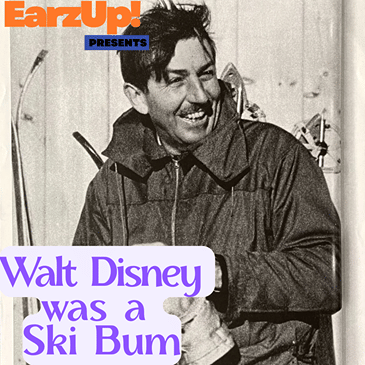
Skiing isn't for everyone. It's hard to learn, expensive to do often enough to get good at it, and it can wreck your body. But in the 1930's Walt Disney was part of the cool segment of Hollywood stars that were hitting the slopes of California as often as possible. In fact, Walt loves skiing so much, he wanted to open his own ski resort! And that idea didn't leave the company when he died, either. Today, Erik tells us about all THREE attempts by Disney to lay claim to a bit of hillside.
Learn more about your ad choices. Visit megaphone.fm/adchoices
[00:00:03] [SPEAKER_02] It's time for the show that brings the magic right to your speakers. Yes, ma'am. Yes, sir. Yes, everybody. It's EarzUp Podcast. We are back. Eric, you look confused. Are you okay?
[00:00:21] [SPEAKER_00] No, it's just my computer's telling me right now is the appropriate time to remove printers I haven't used in a while.
[00:00:29] [SPEAKER_02] Okay. Man, I love computers, dude. They're like super smart. I love it. I think it's a great thing to do. Hey, you just started using your computer very heavily. Why not do more tasks?
[00:00:40] [SPEAKER_00] Have you met Clippy?
[00:00:45] [SPEAKER_02] Anyway, guys, what's going on? Everybody, EarzUp Podcast. We're back and we have a great show for you today. Eric has done a lot of research, the thorough researcher that he is, about Walt Disney's skiing habits. If you know what I mean, wink, wink, nudge, nudge, you know, tap the side of the nose kind of a thing, right? That's what I'm assuming we're talking about is habitual drug use from Uncle Walt. Mm-hmm. Yep.
[00:01:08] [SPEAKER_00] Yeah. That's what they say. Okay, great. And they being that they is me tonight.
[00:01:12] [SPEAKER_02] Nice. I love that, dude. Thank you very much, everybody. We're going to talk in code, so he's going to say like mountain retreat, but you guys know what that means. Joining us also is RGH sitting in for the lovely Miss Taryn. Ryan, welcome back, dude. Good to have you. Thanks, dude. Glad to be here. Hell yeah, man. What's going on on your shows, dude? Give us a little rundown, man. We haven't talked about it. Talked with you a little bit.
[00:01:36] [SPEAKER_03] Yeah, it's been a bit. Honestly, Puny Pod, we're spinning our wheels. We need to get together and record some Puny Pod. But I did, this was a couple months ago at this point, I released a kind of primer on how to get up to speed with the Marvel Universe. Okay. And then on Fantasyland Draft League, we actually just released a really fun episode this month.
[00:02:05] [SPEAKER_03] Three of, well, for the most part, two of my co-hosts and I were live in Disneyland and DCA together. And we recorded an episode where we like actually went around and drafted things and actually ate or drank them as we went around.
[00:02:23] [SPEAKER_02] Ooh, okay. You sure did.
[00:02:26] [SPEAKER_03] I love it. Yeah. Yeah, it was a blast. It was a blast. And we had friends of the show, Marie and Mike were special guests for moments. It was a good time. So yeah, that's a fun one to go listen to. Definitely not our normal format or anything like that.
[00:02:44] [SPEAKER_02] Probably not repeatable either, for the most part. Like every show can't be that.
[00:02:49] [SPEAKER_03] No, I don't make that cut.
[00:02:52] [SPEAKER_00] Jason is saying that the jet is ready to pick you up and do it again. Absolutely.
[00:02:58] [SPEAKER_02] Because people would listen to that. Yes, absolutely, dude. That's exactly what I'm saying. Now that, you know, we got a couple million downloads, you know, we can afford to gas the jet up. It's been sitting forever. Ain't that smartless. Yeah, it's like Walt's old plane. It's sitting there. It just needs, you know, a bunch of extra money from the slush fund. Oh, and best.
[00:03:20] [SPEAKER_00] My slushy.
[00:03:21] [SPEAKER_02] Sure. Yeah. The slurpy fund for sure. For sure. Have you guys heard anything about the weather in Disneyland today? Because at least up here in Northern California, the El Nino finally hit. And it was a bastard storm today.
[00:03:41] [SPEAKER_01] Sounds like y'all had a wild time.
[00:03:42] [SPEAKER_02] It was rainy and windy, man. Like out here where we are in East County, Northern California, it just, it gets windy no matter what, because the Delta kind of is over there. And I guess there, it has like this Venturi effect where it just, it sucks in the cold air from the Bay all the way down the Delta. And then it mixes the hot, it just kind of sucks. So it's windy all the time, but then you get the rain and then the storm brings more wind.
[00:04:09] [SPEAKER_02] And it's, it is massive amounts of rain today. I had to go pick up Alice and I'm standing in the rain, just soaking wet, dude. I got two soakers. My jeans are soaked. It was massive, but I don't know anything about SoCal. I would imagine that SoCal got hit with something too, right? Guess her about that?
[00:04:27] [SPEAKER_00] Yeah. Well, Ryan is looking that up because he's, he's looking it up in his memory from earlier today when he read about that.
[00:04:34] [SPEAKER_02] Well, that's how he, that's how he accesses his neural implant. He looks up into the left. He's like, okay, wait. Yeah, that's your, there's okay. There it is. There it is. While he's still thinking about mild today. Oh, okay. Well then.
[00:04:46] [SPEAKER_01] Oh, okay.
[00:04:47] [SPEAKER_02] Yeah. It's been wild, dude. It's been a wild day up here tomorrow. Tomorrow I'm excited because GTA six hits everybody. I will be, if you're listening live and you want to watch me play it tomorrow, I'm going to be playing it tomorrow, probably nine o'clock, eight 30, something like that. Like I'm going to be, I'm ready. I'm ready for it. I'm not like necessarily the biggest GTA guy in the world.
[00:05:10] [SPEAKER_01] Yeah. But you know, it's nice that they made, they made another version of Google that animal.
[00:05:14] [SPEAKER_00] That's right. Um, you know, you can just see, see nice pictures of animals at the zoo. Yeah. GTA, right?
[00:05:22] [SPEAKER_02] What is it? I don't know. What are you saying? Google that animal. Oh yes, for sure. Yeah, yeah, yeah. It's a Google simulator. So if you don't have access to the internet, you can just use that. Yeah. Yeah. Uh, yeah. Anyway, it should be great, man. It's I'm looking forward to it. I have already seen, uh, there's a spoiler that the Disney world is not in the game guys, just so you know, cause it takes place in Florida. It takes place in Miami. So it's like, it's just such a stupid article that one of these Disney blogs wrote where it's like, don't worry. It's not in there.
[00:05:51] [SPEAKER_02] It's cause it's Miami. Why would it be there? It's a few hours away. Yeah. And they don't even sail a ship out of Miami. So why even, why do they even want to be there? You know what I mean? Cause they got to get those clicks. That's right. Um, uh, I did have some news to like talk about real fast, Eric, before we jump into your, into your Johns dude, what do you think?
[00:06:17] [SPEAKER_00] You want to talk? I've been reading about old news for a long time. Let's hear about some new news.
[00:06:23] [SPEAKER_02] You're just, we're releasing you from the cave. You're like, what, what year is it? What, who is the president and where can I get my nails clipped? What kind of niño do we have? Is it L or la? Um, okay. This one Disney announces wave of new discounts and deals ahead of black Friday.
[00:06:45] [SPEAKER_02] By the way, have you guys noticed this trend where it is a black Friday all month long with certain businesses like black? Oh yeah. Yeah. You that's okay. Good. I'm just making sure it's not just local to like whatever I'm doing.
[00:07:00] [SPEAKER_03] Yeah. I, I mean, I think it's definitely this year because people are not spending a lot of money. So let's get them spending some money.
[00:07:08] [SPEAKER_02] Yeah. I wonder why. Yeah. Like even Alice's school, it's like, it's black Friday month. Like what? Black Friday month on lemon bars in the cafeteria. It doesn't make any sense. It's like PTA is here. It's like spirit wear. It's like by the, by the school of your children for 20% off. Wow. Cause it's black Friday all month long. All right, man. Thanks. Oh, I thought maybe it was just a goth theme spirit week.
[00:07:35] [SPEAKER_00] See, that would be sick, dude. Yeah. 3d printers set up. Scan your child's face.
[00:07:42] [SPEAKER_02] Feed it to AI brother. Um, okay. We got, uh, well, do we have anything cool? Disneyland is offering a 20% off ticket discount. Um, I don't know what that's for.
[00:07:56] [SPEAKER_00] You can get free Disney world tickets with a cruise.
[00:08:00] [SPEAKER_02] Hell yeah.
[00:08:01] [SPEAKER_00] That is some big news there.
[00:08:03] [SPEAKER_02] Oh yeah. Uh, Disney cruise lines, newest discount. Each guest age three and older sailing on select Florida cruises from April to September. We'll get a one or two day, one day park per day. Wait, a one or two day, one park per day. Walt Disney world theme park ticket, depending on the length of the sailing. Guests sailing on a three night sailing will receive a one, a free one day ticket while guests on four nights or longer will receive a two day ticket.
[00:08:30] [SPEAKER_03] Yeah. So land and sea. I mean, if you're sailing out of Canaveral, you basically just stay at Disney world anyways. And so it's just a really nice way to like start your vacation. Go to Webcot.
[00:08:44] [SPEAKER_04] Right.
[00:08:44] [SPEAKER_02] Or in dead or something like that, man. Um, apparently there's a Disneyland resort hotel discount. Uh, January 4th through February 25th. 30% up to 30% off. Up to is always the key phrase, you know? It's like, well, it said 30 less up to, sorry.
[00:09:01] [SPEAKER_00] It could be 5%. It's weird though, because there are some times when they put that out where the 30% is huge. There are so many hotels and it's not all like the most expensive ones. Yeah. It's all where they have the most rooms available. So sometimes you can get a really screaming deal on some of the moderates and, and, and value resorts. It's crazy. I love that.
[00:09:23] [SPEAKER_02] Um, this is when you book with your Disney visa card, magic key holders can also take advantage for up to 25% off and the general public can enjoy up to 20% off. I don't know. That sounds confusing to me. Anyway, there's some discounts out there. Oh, apparently there's a Disney plus subscriber to the discount. Now the new Disney plus perks three day, three park ticket prices for this theme park ticket offer start at one Oh nine per day or three 25 total plus tax.
[00:09:53] [SPEAKER_02] It's from January through May and includes Epcot, Disney's Hollywood studios and Disney's animal kingdom. So it's Disney world, huh? Damn. Yeah.
[00:10:02] [SPEAKER_03] So yeah, Disney, Disney world's getting a lot. Cause they just also ran like, it was a non refund, like a special non refundable rate. That was like a hundred bucks a night at the all-star sports, which is, wow. Oh, I haven't seen that in years. Yeah. Yeah. So in, in Port Orleans, Riverside for like 200 bucks a night. Um, that's crazy.
[00:10:27] [SPEAKER_00] No offense, no offense all-star, but I'd stay at Port Orleans.
[00:10:31] [SPEAKER_03] That's where I'm staying in January.
[00:10:34] [SPEAKER_00] It's been, it's been a while since I stayed there. I love that place.
[00:10:37] [SPEAKER_03] Yeah. We're, we're going out and not doing the parks at all. And so it was like, let's go to a place that has a lot of things to do.
[00:10:45] [SPEAKER_00] Old man Island. Exactly. Voted best, vest, vest pool, best pool. Did, did it win best pool? And then.
[00:10:55] [SPEAKER_01] Yes.
[00:10:55] [SPEAKER_03] You guys ended up. Yeah. Best pool. That isn't storm along Bay.
[00:10:59] [SPEAKER_04] Yeah. Oh no, no.
[00:11:00] [SPEAKER_03] What? Well, yeah. Cause you, you count, you discounted storm along Bay.
[00:11:05] [SPEAKER_00] Oh, we did. Oh yes. Okay. That isn't that storm along Bay. I'm like, wait, wait, wait, no, we just counted that. Um, okay. Best pool. That was two years ago.
[00:11:15] [SPEAKER_02] There you go. Go play pool two years ago guys. What do you think?
[00:11:17] [SPEAKER_03] Did you see Jason? Do you have the story about the after hours that got announced today? No. Yeah. So they, they announced the after hours slate for the year. Ooh. What is anything good? Disneyland after dark is what it's called. Uh, original hearts night, Disneylandia night. Okay. I think it's probably their retro night. Merch, merch stuff. Maybe. Yeah. Uh, star Wars night and pride night.
[00:11:48] [SPEAKER_02] Oh, okay. Regular. Hold on. I'm like, press it on. Jeez. Do they have anything regular? Yeah. Well, you know, that sounds, Hey man, at least they're doing stuff, I guess. Right. Yeah. Uh, no, the story I have here is, um, the apparently they're using quick, quick correction.
[00:12:04] [SPEAKER_03] Sorry. Good. Disneyland is celebrating, uh, Hispanic and Latin cultures. So. Okay. Not throwbacky, but no.
[00:12:15] [SPEAKER_02] Kind of cool though. That's new. Disneyland. Why Disneylandia? Disneylandia? Like, cause that's, that's like collectible stuff, right? The Disneylandia.
[00:12:25] [SPEAKER_00] That's been around for a long time. Yeah.
[00:12:27] [SPEAKER_02] So why is it with like Latino heritage and stuff? Disney Anna, I guess is more. Disney Anna. Disney Anna. Yes. Okay. All right. But Disneylandia, I don't understand. I don't get it.
[00:12:37] [SPEAKER_03] It sounds like Portlandia, which is why I thought it was like throwbacky stuff.
[00:12:43] [SPEAKER_02] Yeah. Yeah. I don't get the naming scheme. Maybe someone out there can update me. You know, of course I'm very progressive. So I applaud the, uh, you know, the, the celebration. I just don't understand the naming scheme. I just don't get it.
[00:12:57] [SPEAKER_03] I mean, maybe it's a, maybe it's a test to replace avatar.
[00:13:01] [SPEAKER_02] There you go. No, that's happening, man. People want that to replace something. No, it's, it's, it's happening. You can't, you can't put that tube, the toothpaste back in that tube, man. Um, no, this, uh, new story here, I thought it was pretty interesting. Uh, it's quote, our most advanced audio animatronics in the world. Disney Imagineering reveals how AWS AI brings the star Wars and zillions to life. You know, a little and zillions, I guess is what they're called a little like, um, construction little guys in what is it?
[00:13:31] [SPEAKER_02] The Mandalorian or whatever with the big beards are kind of like miniature Ewoks that have been shaved. You mean like Fraggle rock? Yeah. Like Fraggle rock, something like that, man. Um, but apparently they're going to be using AI to like interact with you now. Um, and I don't necessarily know what that means. Um, yeah, I, I, it just, it has AI in it and I hate it already. So it might be fine, but it's a partnership with Amazon web services.
[00:13:58] [SPEAKER_02] The Anzalians use cameras, microphones, sensors, and AI to understand what's happening around them and respond in real time. They can recognize what a guest is wearing, identify who's speaking to them and even coordinate their interactions with one another.
[00:14:12] [SPEAKER_03] Oh, they were showing this at D23 a little bit. I saw some videos of it and I, I thought it was like a turtle talk with crush thing where somebody like behind the scenes was, was controlling it.
[00:14:26] [SPEAKER_02] But, uh, no, it sounds like, um, so, okay. It says while AI is helping bring these characters to life, it's not writing their dialogue or dreaming up their personalities. That is still very much the work of Disney's Imagineers quote. These Anzalians are now our most advanced audio animatronics in the world. Some Kyle Laughlin, senior vice president. Um, yeah, I guess that's kind of it really.
[00:14:53] [SPEAKER_02] Um, but they're, so I guess they, they're designed to figure out what's going on in the room and then figure out whatever, uh, response that's canned, that's pre-programmed would be appropriate for whatever's happening, I guess.
[00:15:06] Hmm.
[00:15:06] [SPEAKER_02] Yeah. Yeah. So I don't know. I mean, I don't like the idea of like getting scanned by AI, you know, cause then it goes in a database and you get, it's feeding the thing. I don't, I don't like that. It bothers me. That bothers me, but it's a cool use of technology. I just, I just, I just, I just, you know, inherently morally disagree with it. Uh, ESPN now has 54 million pay TV subscribers.
[00:15:35] [SPEAKER_02] Do you guys think that's high or low on their historic?
[00:15:39] [SPEAKER_00] I'm going to guess low. I'll go the other way and guess high, which I'm not doing to be contrarian. I just feel like nobody's been doing that lately.
[00:15:49] [SPEAKER_02] Yeah. Eric wants to be high. That's all right. Um, it is low. It is nearly half of its 2011 peak of 100 million subscribers.
[00:15:58] [SPEAKER_03] That's almost like ATV isn't a thing.
[00:16:01] [SPEAKER_02] I just got the headline for you. That's all I got. I'm not reading that article cause I don't care, but I just think it's funny. I don't know why I really enjoy seeing ESPN just kind of not doing well because I don't, I never understood the point of ESPN. It's for sports bars. That's it. That's all it is. You don't need, nobody really watches ESPN religiously.
[00:16:20] [SPEAKER_03] I feel like it's funny. My, my dad and brother do. I was about to say, don't dads need to have something like, I'll go over to their house and they just have whatever's on ESPN is on. Like that's just what's on really. And I mean, my brother is younger than me and he still has actual cable TV, which is bizarre to me.
[00:16:45] [SPEAKER_02] Yeah, I agree. Like we, we log into Terrence parents cable, you know, whenever we want to watch something, I don't know, like I record Liverpool games and then just watch it from their DVR, you know, that's kind of it. I don't, we don't really, we're just like a plex household. You know what I mean? We just kind of watch the same stuff and it's like, I don't know. I don't know many people who have cable anymore. So I, you know, God bless ESPN. We'll see, see where it goes.
[00:17:12] [SPEAKER_00] I just have an antenna.
[00:17:14] [SPEAKER_02] See, there you go. You should get another one. Get double the, double the things. Anyway, that's all the news I got for you guys. I just wanted to kind of.
[00:17:19] [SPEAKER_04] It works.
[00:17:19] [SPEAKER_02] It's just kind of. Well, yeah, sure it is. I just kind of want to go over what's happening real fast in lieu of our, our news show or proper news show. We're going to do a deep old dive. I thought there was other stuff on an update you guys on, but I kind of forget. So we'll just go on with the rest of the show. Eric, talk to us about the ski bums of Walt Disney World or whatever you're saying.
[00:17:42] [SPEAKER_00] Yeah. Hey, Walt Disney was a skier. Um, and, and how, because I don't know where this guy found the time to do stuff like this.
[00:17:53] [SPEAKER_02] You know, it's funny because you, you know, you, when you think of Walt Disney right now in your mind, you're thinking of a, you know, if you select pictures and maybe some video or whatever, none of which is ever in a snow at all. So it's kind of hard to believe that he did this where it's like a whole secret life that he had away from, you know, cameras or whatever, because I've never, I've never seen this man in a, like a one piece, you know, puffy outfit, um, you know, hitting, hitting the bar for hot toddies after a day on the slopes.
[00:18:23] [SPEAKER_00] There you go. But yeah, there are very few pictures of him on the slopes and they're very old timey because he was into skiing in the 1930s.
[00:18:32] [SPEAKER_04] Ooh.
[00:18:33] [SPEAKER_00] Wow. Yeah. So this is when, when his skiing obsession started and like so many obsessions with Walt, they led to projects later in his life. Uh, and like so many of those projects, once Walt passed away, his company decided to make them their highest priorities because they didn't know what else to do. Uh, gents are, are either of you skiers? I know the answer to this question, but go for it.
[00:19:02] [SPEAKER_00] I have snowboarded.
[00:19:04] [SPEAKER_03] Not well.
[00:19:05] [SPEAKER_02] Uh, yeah, I used to ski, uh, you know, a little bit here and there a couple of times. Uh, did snowboarding for a bit, sucked at it. Uh, but I haven't been in, I don't know, 15 years, man.
[00:19:15] [SPEAKER_00] That's kind of, you know what? I shouldn't have been boastful. Ooh, you were judging us. Not at all.
[00:19:23] [SPEAKER_03] I do enjoy a ski resort.
[00:19:26] [SPEAKER_02] Oh, okay. Okay. I'll tell you, the last time I went, man, I was, uh, it's for my buddy's birthday and like I had my snowboard cause I thought I would go more often and get better at it and never did. And I fell so hard six, seven, eight times. I'm like, you know what? Half day. I just went down to the lodge and just drank a Gordon beer from Mertzons for the rest of the day and watched everyone else fall down the hill. Like this is, this is how you ski. Uh, this is, you know, it's not doing the thing it's sitting, watching other people do
[00:19:56] [SPEAKER_02] the thing. That's a pretty good philosophy right there. I mean, a lot of people. Yeah. I don't need to, that's the thing. I don't need to be in the thick of the action. I can just enjoy it. It's fine. Like I don't need to go to sports games. I don't need to, I'll just sit at home and watch it. I don't need to go to the movie theater. I just said, I don't need to be there. I'll just sit at home and watch it. It's fine. It's so zen.
[00:20:14] [SPEAKER_00] Yeah. You're so enlightened, Jason. Thanks, man. Um, well, you know what? Let me tell you a little bit about skiing in the thirties because as somebody who has spent his entire life on skis, um, skiing in the 1930s was not for casual skiers like, uh, Jason, how do you walk around the house? Yeah.
[00:20:35] [SPEAKER_02] Well, you could do that at home. Well, if your whole life is on skis, like how do you like, yeah. Prove it. Yeah. At least your feet right now. Right now.
[00:20:45] [SPEAKER_00] Go prove it. Yeah. Uh, no, uh, but so I could put on, basically I could put on boots and I could do that because back in the thirties, ski gear was completely different. It was, it was leather boots. It wasn't these big, you know, plastic monstrosities that you snap into something and you've got this nice binding, like bindings back then were very small. They were flimsy. Skis were long. They're made out of wood. They were not very flexible.
[00:21:14] [SPEAKER_00] Uh, before ski lifts and rope toes became commonplace, you had to earn your downhill fun. And you would do that by hiking up, um, herring boning up. That meant like, so if you, if you're, if you're thinking of the skis, you put them into a V and then you walk up. Okay. That gives you the traction to walk up the hill. Um, slow. Um, you could skin up. Um, skinning is, is, is kind of fun.
[00:21:43] [SPEAKER_00] Some people still do skinning. You basically put, they call it skinning because you would put like an animal skin on the bottom of your skis. Okay. These days it's just a textured like microfiber fabric that goes on the bottom of your skis and it grips when you go. It's textured in a way that when you go forward, it slides. But then when you pull pressure on it, on the backend, it will grip the snow. So you can walk up, hike up the hill that way. Okay.
[00:22:11] [SPEAKER_00] It's exhausting, but kind of cool. I bet. Um, yeah. So in the old days you had to basically go up the hill and you might get two runs out of your day. Oh God. Um, I could talk about ski history for a long time. Would you like me to switch up and just talk about ski history for a long time? All right, man. Well, the first commercial rope tow was installed in Quebec in 1931 and it was invented by a man named Alex Foster. Okay.
[00:22:38] [SPEAKER_00] And, uh, I, I'm just going to move on because I wasn't. Well, that's another podcast that we got to work on. That's, that's, that's the ski cast. Right. Um, which probably exists and is doing a better job than me right now at talking about skiing. But anyway, uh, skiing kind of came over from Scandinavian, Scandinavian. And European communities where winter travel was a big deal. Winter sports was a big deal.
[00:23:06] [SPEAKER_00] And in the early days, basically, uh, American participants would have to join like a ski club where you could get like a ride up to the top of a hill and ski down. You'd get taught how to do all of this skiing thing. So these Europeans would come over and teach skiing classes. Okay.
[00:23:27] [SPEAKER_00] Um, and, uh, you know, over time, once the sport became a kind of a bigger deal, uh, companies would come in or, or, or people with money, I suppose. Corporations weren't as huge in the thirties, but you, you kind of clear out a few trees on a run on a hill and you'd create a place where people could come and ski down a little bit.
[00:23:51] [SPEAKER_00] And then commiserate at the bottom, not necessarily the major mountains that we have today. Um, equipment was long skis, leather boots, thin bindings, and heavy clothing that you might not normally wear. And a lot of this was happening in California and it became this kind of, uh, kind of a big deal amongst the Hollywood folks, especially in the late thirties.
[00:24:18] [SPEAKER_00] When Sun Valley installed a chairlift, um, Sun Valley was a, or is a, a lodge that it had luxury lodging at the base of the hill. And it had a lot of the things that we associate with a ski lodge these days, um, where there's a bunch of stuff to do at the base of the hill, like ice skating rinks, restaurants, swimming pools, a hotel. Yeah. Uh, nighttime entertainment.
[00:24:53] [SPEAKER_00] And, uh, yeah, that, that's where downhill skiing became kind of a big deal. So all of these Hollywood elites would come up and hang out for the weekend and, and learn how to ski. And, uh, uh, yeah, that, that, that became another industry. So people like Walt Disney, who could afford to do this sort of thing and have the time somehow and the money would go and hang out.
[00:25:20] [SPEAKER_00] They were desperate for something dangerous to do in the months where they couldn't get onto horses and play polo and hit each other with bats. Right, dude. Uh, so, uh, yeah, Walt liked to ski. He learned how to do it because that's what people were doing back then. It was in vogue. Ski slopes opened up. Technology helped things happen. Walt love, loved technology.
[00:25:44] [SPEAKER_00] As we all know, um, Walt also loved meeting all of these celebrities from Europe. All of these people from Austria and in the Alps and Germany who came over, they were skiing champions. And of course they're hobnobbing with all of the elite and they were teaching them how to ski. So one particular fellow was named, was named Hannes Schroll.
[00:26:09] [SPEAKER_00] Um, he was also a champion yodeler who eventually recorded Goofy's iconic falling scream in the short how to ski in 1941. Oh, yeah, that's Hannes Schroll. Wow.
[00:26:23] [SPEAKER_02] He taught Walt how to ski.
[00:26:24] [SPEAKER_00] He taught Walt how to ski. I love that. Uh, and, uh, yeah, these, this, this was a big deal. So this was, this was Walt having fun. And, um, yeah, you know what? As, as time went on, Walt got into many other dangerous sports and injured himself many times and did all sorts of other crazy things.
[00:26:46] [SPEAKER_02] Yeah, because, you know, you talk about the bindings and stuff. And what I know about the ski bindings is they're made to be breakaway, like a, like a dog collar or a cat collar. Like if you twist your ankle, it will break away. So you don't wreck your knee or your ankle or your hip or whatever. But back then they didn't have that. So you're just in the thing and you're probably, there's probably you're ripping tendons left and right, man.
[00:27:09] [SPEAKER_00] Uh, yeah, if you, you know, you, you could certainly, thankfully you couldn't get going too fast because they weren't as, they weren't designed quite that way. Yeah. Unless you're an expert.
[00:27:21] [SPEAKER_02] Yeah, for sure. Okay. That makes sense. Yeah.
[00:27:24] [SPEAKER_00] Yeah. And you weren't necessarily going, you weren't like going up on a helicopter to the top of a mountain and going down a straight chute.
[00:27:31] [SPEAKER_02] Yeah. There's, I mean, there is also that where, because I think of like, you know, the, the double black diamond runs and the moguls and all that kind of stuff, but it's probably more what we would think of like a bunny hill now, where it's just like, you're, you know, you can get a little clip going, but that's about it. Because you're, what are you going to do? You have a heart attack climbing up a mountain and skis.
[00:27:48] [SPEAKER_00] Yeah. Do you think Clark Gable is climbing up a mountain to go down? He's going to hike a little bit and then he'll go down and go, well, let's have 17 martinis. Yeah. Well, in the late thirties, 1938 to 1939, um, troll organized investors for a new ski destination near Donner Summit, California. Oh yeah, for sure. Everybody loves those Donners. That's true. That's true. Donner party of seven. Yeah.
[00:28:16] [SPEAKER_00] Walt kicked in about $2,500 to the venture and the sugar bowl opened up in December of 1939.
[00:28:25] [SPEAKER_02] Wait, Walt wasn't an investor in sugar bowl.
[00:28:28] [SPEAKER_00] Yeah. Damn. Yeah. He was an early investor in that. And, um, yeah. So in addition to, in addition to sun Valley, uh, Walt got into sugar bowl in its early days, a similar sort of idea, but it became a favorite vacation destination for Walt and his family. But then, uh, you know, time went on and I'm sure Walt did plenty of other things, but, uh, but yeah, Walt in the late fifties was working on third man on the mountain.
[00:28:58] [SPEAKER_00] Have you guys done third man on the mountain yet on, I did, I, on Buena Vista boys. No, sir. Well, this one is about, uh, about people in the Swiss Alps climbing the Swiss Alps and the Matterhorn in particular. Okay. This is, this is where Walt fell in love with the, the, uh, the mountain village of Zermatt.
[00:29:20] [SPEAKER_00] And, um, he loved that this was a mountain community that didn't have automobiles even in the late fifties. So it was, it was accessible by, by all automobiles and train. But then once you got up there, it was all, it was, it was all quaint and old timey. And, uh, that Alpine scenery directly influenced the Matterhorn bobsleds.
[00:29:46] [SPEAKER_00] This is where we get the famous story of Walt sending a postcard of the Matterhorn and saying, build this.
[00:29:55] [SPEAKER_02] Damn.
[00:29:56] [SPEAKER_00] Yeah. Uh, so Walt had already started thinking of things like his eventual mineral, mineral King resort, where automobiles would be restricted to the outer edges of the central resort. This is also something that we see in Epcot. That's what I was thinking. The cars out. Let's have people walking around. Let's have cool futuristic technology bringing them around. And this is in 59.
[00:30:23] [SPEAKER_00] So then comes 1960, uh, where the winter Olympics were held in squaw Valley and pardon the, uh, the, the, um, racial tones of squaw. But that's where California, uh, the winter Olympics in California were a huge deal. And Walt Disney was invited to help stage the opening and closing ceremonies.
[00:30:49] [SPEAKER_00] So Walt is intimately involved with all of the people building this entire, uh, this entire event. So it's outdoor recreation. It's showmanship. It's crowd management. It's major event logistics. This is all Walt Disney's bag. He was there. He learned things. He contributed things. He already knew.
[00:31:11] [SPEAKER_00] And he got to learn about how to design a ski mountain from people like ski expert, Willie Schaeffler, uh, who worked on, uh, the course development. And he was recruited later to help Walt with, with his, uh, with his endeavors. So the 1960 Olympics and Walt skied while he was up there, he had previously invested in a ski resort.
[00:31:39] [SPEAKER_00] He had been to Europe to visit world-class mountain destinations. And he thought, why not me? Why don't I build another one that isn't just a theme park? Why not me? That Disneyland is small potatoes. Why doesn't even know? Yeah. Right. So Walt decides to, to transition, you know, it's, it's, it's time to look into something bigger. Can we make something like this economically feasible?
[00:32:10] [SPEAKER_00] Yeah. Now, how much do you two know about Mineral King at this point? It's, it's one of those kind of big, big name ideas that Disney tried to do, but never happened.
[00:32:23] [SPEAKER_03] Not much. I like, I've heard it around a lot and some of the ideas that were kind of originally there, like, um, like the bears. There you go.
[00:32:37] [SPEAKER_02] I don't know anything about it.
[00:32:39] [SPEAKER_03] Yeah. Not much more than that.
[00:32:40] [SPEAKER_02] Yeah. I've heard the name and that's about it.
[00:32:43] [SPEAKER_00] Well, Hey, uh, Walt was, was thinking about all of this. And like, like Ryan said, we're going to get to the bears.
[00:32:51] [SPEAKER_01] If people have been sitting around going, when are they going to talk about the animatronic bears?
[00:32:55] [SPEAKER_00] We'll get there. Yeah. Yeah.
[00:32:57] [SPEAKER_01] Calm down on bear enthusiasts. Yeah.
[00:32:58] [SPEAKER_00] Everyone relax.
[00:33:00] Yeah. Come on.
[00:33:00] [SPEAKER_02] You're embarrassing yourself.
[00:33:02] [SPEAKER_00] Walt got to dreaming again. And, uh, after hanging out with Willie Schaeffler and watching him lay out these courses and groom the runs for the winter Olympics, he decided to assemble a team. So Willie was brought in to advise on suitable sites as would our pal and yours and Walt's buzz price. Now, do you recall buzz price from choosing the location for Disneyland?
[00:33:33] [SPEAKER_00] Um, a few years earlier.
[00:33:35] [SPEAKER_02] No, I knew that that's where he's from, like the kind of old school, you know, thing, but I, I couldn't remember what he did. No.
[00:33:43] [SPEAKER_00] Okay. Well, yeah, we, uh, yeah, buzz, buzz. Buzz is a cool guy. Harrison buzz price, uh, was born in 1921 and lived until 2010. He was brought in to help find the Anaheim site for Disneyland while he was working for the Stanford research Institute. He studied population highways, land availability, tourist things, all of this financial stuff that led into picking Anaheim as a location.
[00:34:12] [SPEAKER_02] All the really exciting parts of it. Oh yeah. Yeah.
[00:34:44] [SPEAKER_00] Yeah. Mineral King. Mineral King is in a remote Alpine area in the Sierra Nevadas. It's in Tulare County, California. Um, at the time it was surrounded by Sequoia National Forest and adjacent to the Sequoia National Park. That probably means something to some people. It's not in Northern California. It's not in Northern California. It's basically in Central California, but it's up in the mountains.
[00:35:14] [SPEAKER_00] Uh, historically it was a mining area. Uh, the, uh, the indigenous tribes there unfortunately were driven out when silver was found in the area. Uh, uh, uh, uh, yeah. Yeah. Yeah. And then the mining ran out for summer cabins, camping, hiking, and outdoor recreation.
[00:36:05] [SPEAKER_00] Uh, because that's what we do in the mountains.
[00:36:35] [SPEAKER_00] Uh, for, for something. You've got to look up things like U S U S forest service development, um, documents from the sixties. Oh man. Let me tell you. Oh, I'm jealous.
[00:36:48] [SPEAKER_02] I'm jealous of you.
[00:36:49] [SPEAKER_00] Wow.
[00:36:50] [SPEAKER_02] Yeah. Why don't you go ahead and read them to us now? That'll be a patron only episode. Yeah. Eric reads U S for forestry documents.
[00:36:59] [SPEAKER_00] Uh, but yeah, you know what? It, it, it's, it's not, it's not terribly interesting, but what it comes down to is there was some interest in, in doing something with this land. So it took somebody like Walt Disney to come in and a few other people to come in and look at this land and say, suggest that they develop it. So the forest service, um, issued, uh, a prospectus.
[00:37:28] [SPEAKER_00] They were looking for proposals for year round recreational development in mineral King. And several proposals were submitted. Um, Disney ended up being the top one out of that group. Uh, they looked at economic feasibility. They looked at the era's suitability for skiing. So that's where Willie Schaeffler came back in.
[00:37:53] [SPEAKER_00] Um, he's looking at things and saying, yeah, we could do runs up here and here's how you would carve this, this area out. And basically saying in the winter, we've got skiing during the summer. We've got something else. And in December of 1965, the U S forest service publicly announced that Disney was selected to develop this land.
[00:38:16] [SPEAKER_00] All of that preparation was what really wowed them because Disney didn't want to just build a ski resort and didn't just want to put camping there. They, they really met the demand for year round something to do. But Disney really had a lot of planning and transportation problems to face after that. So what did they actually propose?
[00:38:43] [SPEAKER_00] Uh, there is a Disney promotional brochure from 1967. Disney brochures being from Disney. They're slightly more interesting. That much more interesting. Yeah.
[00:38:55] [SPEAKER_03] How many times did it use the word imagination and storytelling?
[00:38:59] [SPEAKER_00] This was the 60s. We hadn't thought of imagination and dreams.
[00:39:03] [SPEAKER_02] We weren't magic yet. We weren't really, uh, you know, scraping the bottom of the marketing barrel yet. You know what I mean? It was still like, just the idea of a, of a Disney thing would be enough.
[00:39:13] [SPEAKER_00] Yeah. Right here. That's basically what we've got early on. We'll get to some more propaganda ish stuff.
[00:39:20] [SPEAKER_02] Okay. Good. I love a propaganda segment. Oh God. With that teaser, let's take a break, Eric. Okay. All right. We're going to take a break. We're going to come back. We're going to learn more about Mineral King, uh, which is not a, uh, WWF wrestler from the eighties, which it should be, to be honest with you, you know, hacksaw Jim Duggan battles the Mineral King. Hang on everyone. It's ears up podcast. We'll be right back.
[00:39:48] [SPEAKER_02] And now back to the show that ignites your dream wish of imaginations and magical color wonderment of forever. Ears up. All right. Thanks for sticking around everybody. All right, Eric, tell us a little bit about what Walt had planned for Mineral King.
[00:40:07] [SPEAKER_00] Hey, uh, yeah, let's talk about that because we're going to go back to that promotional brochure. Okay. From 1967. Brochure. Brochure. Yeah. You don't, you don't hear the word brochure.
[00:40:22] [SPEAKER_02] No, it's just bro or oh sure.
[00:40:23] [SPEAKER_00] But yeah, but yeah, yeah, sure, bro. Yeah. That's the way we usually say it these days. That's right. Well, uh, what would we like to put into Mineral King? Well, Disney decided to put, uh, more than $35 million into it. That's what the brochure claims.
[00:40:41] [SPEAKER_02] 35 million in 1960, you said?
[00:40:44] [SPEAKER_00] 1967. That's a lot of money. That's a fair amount of cash. Yeah. Lifts at full development. They, it kind of differs along the way, but in this brochure, it was 20. Uh, skiers could, uh, we could get up to 20,000 people a year, uh, or no, not a year. Um, at one time on the hill, sorry, simultaneously 20,000 people. It's a big ski resort. Wow. Dude. Annual visitors at full development, 1.7 million.
[00:41:14] [SPEAKER_00] Jeez. So this was pitched to open in winter of 1973 into 1974, pretty short time period, a little more than just, you know, bulldozing some orange groves and putting in a massive theme park.
[00:41:31] [SPEAKER_02] Yeah. You can't open the ski resort when it's not fully done yet, you know? Right. You gotta have a little more planning than that.
[00:41:38] [SPEAKER_00] Yeah. And that was the early target because the whole resort was, it was intended to be opened by 1978. Uh, so four major bowls of mountains that, that means a lot to the skiing folks. Okay. Uh, some, uh, some ski runs, some of the longer runs would extend more than four miles. That is a leisurely stroll down the mountain.
[00:42:03] [SPEAKER_02] A four mile skiing run.
[00:42:06] [SPEAKER_00] Yeah. That's, that's, that's, you know, heading down Mary Jane trail in, uh, in, in Colorado here. That's a long ski. Yeah. No, I'm not making fun of, uh, I'm not talking about weed. Yeah. Like that's, that's actually a, a legitimate trail. I thought you were several miles long.
[00:42:26] [SPEAKER_02] Well, gee, I wonder why it's named after if it's in Colorado.
[00:42:30] [SPEAKER_00] It was actually named after a lady of a, a, a, a sex worker. Later the night. Who, uh, was famous in the area.
[00:42:37] [SPEAKER_02] Oh.
[00:42:38] [SPEAKER_00] I'm not joking. I don't think that you are.
[00:42:41] [SPEAKER_02] Mainly because it's Colorado and you never actually really know what's going on in anybody's mind in that state.
[00:42:48] [SPEAKER_00] Yeah. We are going to meet governor Edmund G. Pat Brown. How do you get the nickname Pat? Pat, when your name is Edmund, I don't know, but Edmund and Pat, uh, are, are becoming besties because Walt is whining and dining these officials in the state. He wants mineral King to happen. So they're going on publicized visits to the Valley. They're showing up in the middle of nowhere with a table and Roy in the background, wringing
[00:43:17] [SPEAKER_00] his hands, wondering where the money's going to come from. Right. The big problem that Walt is trying to solve. There is a road that has to come from the net, the, the highway around or through national forest into this proposed section. And this highway needs to be all weather. It needs to be that it needs to be available all year long. Oh, sure. In the summer it's one thing, but in the winter.
[00:43:47] [SPEAKER_02] So this was going to be like a multi-season thing also, like it would be open in the summer to do summer things, whatever people do in the summer outdoors. Also not just skiing. Okay. Yeah.
[00:43:59] [SPEAKER_00] Exactly. Yeah. There needs to be camping. There needs to be a lodge. This is a destination resort all year round and we've got to get people up there. And this road was going to cost $25 million. Just the road. Just the road. So Walt being Walt, he, that's not for Walt because it's going through national forest. It's going through California forest. It somebody has got to pay for infrastructure here and it's not going to be Walt Disney.
[00:44:29] [SPEAKER_00] Right. In 1966, Pat Brown announced $3 million in grant money toward the highway.
[00:44:38] [SPEAKER_02] Okay. That's good. That's good. That'll sign the paperwork.
[00:44:41] [SPEAKER_00] Yeah. Yeah. That's a good start. But Pat was very significant as, as far as political, political figures were concerned because Walt got him on board. Pat was on board for this, this business plan. He wanted to make this happen. He wanted to have another cool ski resort that had the Disney stamp of approval on it.
[00:45:03] [SPEAKER_02] Sure. And he could go to for free probably.
[00:45:05] [SPEAKER_00] Oh, probably.
[00:45:06] [SPEAKER_02] That never hurts either. Right?
[00:45:07] [SPEAKER_00] Yeah. Yeah. Now, why was Brown so interested in this sort of campaign? Perhaps it's because he was running for re-election against a political unknown, a young fella named Ronnie Reagan. Yeah. Oh, yeah. Well, Reagan defeated Brown in November of 1966.
[00:45:32] [SPEAKER_00] And despite their differences in political affiliations, both Brown and Reagan were very interested in mineral. Of course. Now, here's the problem. We're starting to get all of this momentum. We're getting this road built. We're going to start working on this project here.
[00:45:50] [SPEAKER_00] We have an economic argument for an additional $22 million in local investments into the communities around the valley. We can keep the locals happy. We can support jobs, an additional 2,500 jobs at the resort by 1976. We can have higher payroll than any other ski resort in the state.
[00:46:19] [SPEAKER_00] Weird that we're talking about higher payroll for a Disney thing. Yeah. We can increase tax revenues by millions of dollars all the way. They're projecting this out through the 80s. Buzz Price is doing his homework and everybody's excited. Then Walt says, let's do this. Let's do this thing I've been thinking of. What are the kids going to do at night after a day of skiing?
[00:46:46] [SPEAKER_00] What are they going to do when we're sitting around? Let's have an animatronic show. Let's start the country, country bear jamboree. I'm not going to talk a lot about the country bear jamboree here.
[00:47:00] [SPEAKER_02] Yeah. Well, I think we've covered that on several shows now. It's a classic.
[00:47:04] [SPEAKER_00] It's good. I love it. Exactly. There's plenty of information about that. But this is where it came in. This is where Mark Davis and Albertino came up with the concept of entertaining bears. And this was where it was supposed to be. We're going to have this dining destination where you can hang out with bears. And there you go. Everybody's excited about all of this.
[00:47:31] [SPEAKER_00] Unfortunately, what do you think about when you hear the year 1966? Oh, Walt dying. He sure unfortunately did pass in 1966 on December 15th, less than three months after he showed up in Mineral King with Governor Brown. So a lot of things start to fall apart, as you might expect.
[00:48:00] [SPEAKER_00] Now, we're looking at this access road. Not an easy place to get to. It's a mountain road, so it's going to be difficult. It's not suitable for heavy traffic. If people are driving up for the winter sports, it basically was going to be 20 miles through the mountains. Probably massively more expensive than they originally budgeted for if they actually did it.
[00:48:26] [SPEAKER_02] For sure. I mean, if you've driven on any mountainous road in California at any point in time, it's always going to be a mess. It's always a mess. Yeah. So I can imagine that that was a minimum budgetary ask.
[00:48:42] [SPEAKER_00] Right. And there were a lot of discussions about the resort itself. Being up in such remote territory, people were concerned about the land impact that Disney would make on the area. Disney was trying to lay things out to say that the actual ski runs would be more obscured by trees. If you see a lot of ski resorts these days, it's basically they just raise down a bunch of trees. Yeah.
[00:49:09] [SPEAKER_02] It's like scars, you know? It's just. Yeah.
[00:49:12] [SPEAKER_00] Yeah. They carve a run out. And there you go. Disney wanted to obscure this behind mature growth trees and do a lot of forest conservation in the area. That's what they proposed. Who knows how well that would work. The resort was supposed to be hidden. The road itself was supposed to be hidden. But really, it's raising a lot of environmental issues at a time when this was kind of new.
[00:49:40] [SPEAKER_00] So the Forest Service was involved. They wanted this. They supported the brochures that the Disney company was putting out. They were behind. They were backing this project the whole way. But then conservationists, a new concept showed up and started raising these problems. So the Sierra Club became this big figurehead for the opposition against Disney.
[00:50:10] [SPEAKER_00] There's an interesting article where in kind of like the local news, some of these people in the Sierra Club were basically writing and saying, don't worry, people. We're going to figure this out. This Disney fella, not going to happen. Not good. Not good. And it's not good to, it's not easy to go up against the mouse. But yeah, Disney's trying to win over, win over residents. But conservation is a new deal.
[00:50:39] [SPEAKER_00] There's even, this court even goes to the Supreme Court where most of the Supreme Court wants to let this happen. There's a dissenting opinion where essentially the dissenting judge says, what does Mineral King have to say about this? And is valuing the land and the opinion of, you know, quote, the opinion of the land.
[00:51:03] [SPEAKER_00] Saying that conservation is important enough, we shouldn't just look at the opinions of people who live nearby and the opinions of the company that wants to build things here. We should look at the injury that could happen to our country. Because once you carve out chunks of our land, that's it. The land ought to have a voice as well.
[00:51:28] [SPEAKER_02] That's very zen. How 60s, you know?
[00:51:31] [SPEAKER_00] Yeah, very 60s. Justice William O. Douglas. That was his famous descent. So what happened after the Supreme Court opinion? Everything kind of fell apart. Walt wasn't there. The people were starting to turn against it. There were discussions about putting a cog railway that would bring up people up to the base of the canyon. Instead of just driving all the way through. Which would have been cool. And in some ways.
[00:52:01] [SPEAKER_02] I knew there had to be a train involved. That was my big question. Like, where are the trains? Where are we? What are we doing? Is this really a Disney project?
[00:52:10] [SPEAKER_00] Yeah. So ultimately, you know, it was becoming to be more of a problem than they wanted to deal with at a time that they had just opened up or were just opening during all of this. It was a Walt Disney World. Right. Right. Right. And the company turned around and said, you know what? We're not going to handle this anymore.
[00:52:33] [SPEAKER_00] In 1972, Ronald Reagan signed legislation removing the proposed highway route from the highway system. So that was kind of a death blow right there. Figures. Yeah. And the final environmental impact statements were completed in 1976 and did not look favorably upon Disney's proposed impact in the land. And they left it alone. But did they leave the idea of a ski resort alone?
[00:53:03] [SPEAKER_00] The answer is no. Where could it be more favorable? So we move now to Independence Lake, a second attempt, which is something I knew nothing about before I started this research.
[00:53:15] [SPEAKER_02] Right. Yeah. Mineral King. Yeah, for sure. But like Independence. I don't even know where that is. Truckee, California. Truckee. Yay. Okay. All right. Yeah, there you go. We like a Truckee visit, you know?
[00:53:28] [SPEAKER_00] It's near Mount Lola. So if you know Truckee, you may know Mount Lola. I don't know either. But yeah, the proposed development was going to be in both Sierra and Nevada counties. And this area was already known for camping, hunting, mountain recreation. Most of the land was privately owned, which looks good for Disney because they're just buying private land instead of U.S. Forest land.
[00:53:58] [SPEAKER_00] Right. And yeah, this was going to be their alternative to Mineral King. So the partners that came together to purchase this area were Walt Disney Productions, the Southern Pacific Land Company, and the Sierra Pacific Power Company. That's weird. What year was this? Interesting. This is 1972.
[00:54:20] [SPEAKER_02] So it's interesting that, you know, what, six years or so after Walt has passed on by now, they're still moving forward with this project, this desire. Even though, like you said, it's about 72, so Disney World just opened. Like, they're trying to get that together. Yeah. Yeah. And they're like, yeah, we're going to do this other thing now, too, that has nothing to do with the parks at all.
[00:54:47] [SPEAKER_02] I just find that, I don't know, I find it interesting because you kind of think of like when Walt died, like everything stopped and it was just Disney World and then that was it. Right. But it seems like there was a lot more irons in the fire than we know about with this, like a ski resort doesn't seem like, it seems like the perfect thing for Roy to be like, absolutely not. What are we talking about? We have this massive park in Florida.
[00:55:13] [SPEAKER_00] Oh, no. What are we doing? Well, at this point, Roy has passed as well. Oh, yeah. Ecard Walker is running the show. Okay. At this point, you know, Roy died only within a year after Walt Disney World opening up. He did.
[00:55:29] [SPEAKER_02] Okay.
[00:55:30] [SPEAKER_00] All right. All right. So we're chugging a lot, although a lot of this was still kind of in the planning, I'm sure, when what Roy was around. It was, you know, we don't know as much about that, but it's another project. And hey, let's have Walt's dream come true here. Let's build another thing that he wanted to do.
[00:55:49] [SPEAKER_03] It's kind of interesting because it seems like, like diversification away from parks is something that they spun their wheels on so hard for so long.
[00:56:01] [SPEAKER_00] Theme parks weren't going to be the end of the company's efforts. We're talking about city planning. And I mean, sure, this is still a resort, but the amount of planning that has to go into getting people up there and bringing in power and water and sewage and everything to a place like this would have been incredible.
[00:56:21] [SPEAKER_02] But I guess also like the amount of cuts that they made to Epcot after Walt's death because of what I think is budgetary concerns. I don't know. But then they're talking about investing a bunch of money in doing this other thing. It just it doesn't seem congruent. It seems like you're talking about two different companies.
[00:56:40] [SPEAKER_00] Yeah, we always hear about Walt Disney World because there was so much attention on it and it became it became what it is now this massive. You know, behemoth of entertainment land, but they had already gotten that land put together. Here they're they're they're not even getting the rights to everything.
[00:57:04] [SPEAKER_04] Right.
[00:57:05] [SPEAKER_00] Yeah. Now, Independence Lake was formally announced on July 16th of 1974. They wanted they're announcing this is going to be our next major year round development. Skiing, lodging, restaurants, recreation, winter, summer. This is we got the same thing.
[00:57:25] [SPEAKER_02] Yeah. Yeah. We got you covered. We got your needs covered at Independence Lake.
[00:57:29] [SPEAKER_00] Right. And yeah, this is this is a pretty big deal. This was going to be 17,000 acres. There was going to be a pedestrian village. Total development cost by 1978. So at the end of the project was going to be one hundred twenty million dollars. Beds for residents were going to go for visitors was going to be over three thousand. Three thousand beds.
[00:57:59] [SPEAKER_00] Wow. That is a big space, man. Yeah. Yeah. Estimated visitation, one point eight million visitors, which isn't actually that much more than what they wanted at Mineral King. Yeah. But yeah, ten ten ski lifts, not quite as big an area. Ski runs were going to be around Mount Lola. And this is going to be a shorter stay sort of vacation.
[00:58:25] [SPEAKER_00] Ultimately, this became a problem because the Southern Pacific and Sierra Pacific power companies held most of the land. But there was also federal land scattered around all of this. So Disney kind of said that that that's part of why it fell apart. It was difficult to negotiate all of this.
[00:58:48] [SPEAKER_04] Hmm.
[00:58:49] [SPEAKER_00] That makes sense. We are now in 1975 where the Forest Service is involved and is still preparing land use plans. Disney still has its partners, but negotiations aren't going well with all of these private and federal areas trying to negotiate with each other. But it's weird.
[00:59:15] [SPEAKER_00] This doesn't completely stop things because Disney continues work and then kind of restarts everything in 1976 and 1977. So the Forest Service comes back after Disney keeps pushing at it and they conditionally agree to a smaller area. So instead of 17,000 acres, they agree to 2,700 acres. Okay. How generous. Right.
[00:59:44] [SPEAKER_00] Now they want to make sure that Disney is doing environmental studies before they start working in there. But there's no permit to do construction. And this is where Disney starts to try to win over residents. This is where they put out a newspaper called the Independence Lake Progress. And you can find copies of this newspaper online. And they've got FAQs and things in there.
[01:00:12] [SPEAKER_00] The subjects of stories are proposed federal land exchange. Ooh. Economic benefits for the county. Traffic demands. Water quality. Employment. Community outreach. So they're trying to say things are moving along and it's all going to be great, everybody.
[01:00:34] [SPEAKER_02] Yeah. Nothing bad can happen. It can only good happen.
[01:00:38] [SPEAKER_00] Right. Yes. We will employ 900 people to build all of this. And there will be 700 permanent jobs in operations. And look at all the tax revenues. And residents were not happy about all of that. And the newsletter kept pushing back against this. I don't know. I haven't been able to find out how many editions they had of this newspaper in the area. Yeah.
[01:01:06] [SPEAKER_00] I'd love to see the final one where they're like, well, screw it.
[01:01:11] [SPEAKER_02] You guys really screwed the booch on this one. You can't. We're not. We're leaving now. And you're never going to make it in life.
[01:01:18] Yeah.
[01:01:18] [SPEAKER_00] But yeah, they didn't win over the Sierra Club a second time. And they certainly didn't win over Janet Edson of the Sierra Club, who also wrote in that article, we're also concerned with national issues, which is why I want to keep up to date around the country.
[01:01:43] [SPEAKER_02] Okay. I love a national issue being brought into a regional issue.
[01:01:47] [SPEAKER_00] Yeah. But yeah, it's not too easy to fight a national hero like Mickey Mouse. But we feel it's necessary to save our county. Okay.
[01:01:59] [SPEAKER_02] People get so dramatic over this stuff, too. And I'm all for conservation. I get it, right? But we got to fight for the dignity of our... Stop. They're trees. And I know they're important. And I'm not discounting it. But at some point, it's like, you have chipped us down 15,000. Give us 3,000 acres. It's fine. It's not going to be that big of a deal. We actually need to live also. We're going to bring jobs.
[01:02:28] [SPEAKER_02] You want your town to succeed? Just give us 3,000 acres. That's it. It's not that big of a deal. Leave me alone. Oh, gosh.
[01:02:35] [SPEAKER_00] Well, yeah. So it's not too much longer that Disney gave up on Independence Lake. Then Disney moves on to their third and final attempt to open a ski resort. All right. And in this case, they're saying, why not buy a ski resort that exists? There you go, man. If you can't beat them, buy them.
[01:02:55] [SPEAKER_00] So they turn around and come back to Sun Valley in Idaho, which was at the time one of America's most famous ski resorts. It was originally developed in 1936 by the Union Pacific Railroad. And, yeah, it was luxurious and it was fun and people would drive up there and all of the things. And now it's the 70s.
[01:03:21] [SPEAKER_00] And it was going under because of poor snowfall in Utah for several years in a row. Disney comes along and in 1977 starts stating that they would like to look into purchasing things. They wanted to improve the facilities there and access a broader vacation market going forward. They put in Disney. They promised Disney publicity and advertising, bringing in Disney characters.
[01:03:49] [SPEAKER_00] They promised access to the Magic Kingdom Club, Disney's travel folks. Oh, yeah. You know, where you get discounts on traveling to Disney things. And they're basically saying, hey, people go to Disney resorts all around the United States. Why not? Why not here? Right.
[01:04:11] [SPEAKER_02] Why not here? Why not us? Why not me? Why not you? Why not? Right.
[01:04:16] [SPEAKER_00] But, yes, they wanted to entice skiers to come back to Sun Valley, people who had kind of left the jet set mentality of the early 60s. Yeah. And come back to cool new places to see and new entertainment, bring families in, kind of change the resort a little bit, get some areas for beginners as well as advanced skiers. And they wined and dined everybody. They wanted convention space. They wanted meeting space.
[01:04:45] [SPEAKER_00] They wanted travel planners to get involved and start pushing Sun Valley. They had a whole bunch of stuff planned. There's no real documentation showing that they wanted to do any Disney-related rides or attractions. There were no country bears advertised. But they put a lot of work in to a proposal to Sun Valley.
[01:05:09] [SPEAKER_02] Sounds boring, to be honest. You know what I mean? Like, they started with a fun concept. And then it just got diluted over time and beaten into a pulp. And it's like, oh, now we want a convention center and an office space. You know? Right. You can get your tie pressed. Yeah. Get custom polyester socks. That's it. That's all we need.
[01:05:32] [SPEAKER_03] I mean, this sounds like a DVC-only resort without the DVC-only part.
[01:05:37] [SPEAKER_00] Yes. But Ryan, they also wanted school groups to come and scout groups and seniors and churches.
[01:05:45] [SPEAKER_02] Wouldn't they just go anyways? Like, what was precluding them?
[01:05:49] [SPEAKER_03] This feels like a side investment that somebody, like, mixed up.
[01:05:53] [SPEAKER_02] They needed to get bailed out of. They're like, hey, card, I got into this really bad investment. Why don't you want to buy my share in Sun Valley?
[01:06:03] [SPEAKER_00] Yeah. Well, why didn't Disney buy Sun Valley? Well, the main reason, as far as I can find, is that Earl Holding bought Sun Valley. Earl Holding was a Utah businessman who opened up the Little America Hotels. Do you remember Little America? I have seen the billboards for it in Wyoming.
[01:06:28] [SPEAKER_00] Yeah, I've never stopped at one, and I'm a little scared of them because of where they are and where you see the signs. He was also a major investor in Sinclair Oil. Okay. The gas stations. He ended up buying Sun Valley for $12 million. Disney kind of backed off after there was a significant investor because it was going to be massively expensive to do the things that they wanted to do, and they weren't even all that excited. It doesn't sound like it.
[01:06:58] [SPEAKER_02] They put really a whole lot of effort into it.
[01:07:02] [SPEAKER_00] Right. Well, let me wrap up here with the end of Walt's ski dreams, and I'd like to talk about the end of each kind of push here and a little bit about what is there today. Independence Lake ended in March of 1978 after years of environmental studies and planning and millions of dollars invested in all of that.
[01:07:25] [SPEAKER_00] They suspended additional work on environmental reviews in 1978 and said, we're done. What is there at Independence Lake now? It's protected. It's a protected alpine lake and natural recreation area.
[01:07:43] [SPEAKER_00] The Nature Conservancy acquired a lot of the property around the lake in 2010, and it is a protected habitat for native cutthroat trout. Damn, dude. Those trout will get you.
[01:08:00] [SPEAKER_02] They will, dude. Poker playing trout. Yeah.
[01:08:03] [SPEAKER_00] Yeah. Mineral King was officially ended much later than you would think in November of 1978. Huh. Okay. They continued to fight the environmental opposition, but then finally gave up. Congress passed legislation to expand the national park system, and that entire area was headed to Sequoia National Park. What is there today? It's Sequoia National Park. There are campgrounds there.
[01:08:31] [SPEAKER_00] It can be accessed through winding roads. Definitely not an all-weather highway system. There are no ski lifts, villages, or hotels there.
[01:08:42] [SPEAKER_02] Or country bears that will sink.
[01:08:44] [SPEAKER_00] No country bears. The road remains seasonal despite substantial road improvements over the last couple of years that are continuing into 2027. And Sun Valley, as I mentioned, was bought by Earl Holder, and it's also still there. It remains a major ski and vacation destination. You can still go there.
[01:09:12] [SPEAKER_00] It remains under the holding family, meaning it's one of few really major ski destinations that's owned privately instead of owned by major international corporations.
[01:09:26] [SPEAKER_02] Well, it's kind of nice, I suppose. You know, if there's a silver lining to anything, I guess.
[01:09:31] [SPEAKER_00] Yeah. Well, Disney never built Mineral King, or Independence Lake, or purchased Sun Valley. But nevertheless, one part of Walt's vision remains. It's our pals the Country Bears and the Country Bear Musical Jamboree and Walt Disney World. Sorry it's no longer there in Disneyland, folks.
[01:09:51] [SPEAKER_00] But despite some new songs and some fresh coats of fur paint, the bears are still around in Orlando today in the same place that they were at in 1971. They've outlasted every plan for every one of those mountain resorts. That is the story of Walt Disney and not opening a ski resort.
[01:10:20] [SPEAKER_02] Very good, Eric. Very good. That's very interesting. You know, like I said, there's a lot of stuff that we talked about before that is brand new that we didn't know about. You know what I mean? Yeah.
[01:10:31] [SPEAKER_00] I never knew about Sun King, nor did I know about Independence Lake.
[01:10:35] [SPEAKER_02] Yeah. And these are the things like why the Disney company is so fascinating to me specifically. It's the history of the parks, which is hands down my favorite part about doing the show and just the Disney brand. But it's all the other stuff that you don't really hear about behind the scenes, the different diversification into different areas. And like, what are you talking about? Ski resort? What do you mean? Like this whole Coutinho thing, you know, the housing is wild to me that they're actually doing that. You know what I mean?
[01:11:05] [SPEAKER_02] Like to me, that's like, I don't know what the point is. I don't know what the point is. There's no, you're not going there to visit, right? It's not like a destination to like go and then you're going to bring in tax money or whatever. I mean, you are because it's, you know, housing, you know, property taxes through the roof. But it just doesn't make sense to me at all. So it's interesting to talk about it.
[01:11:28] [SPEAKER_03] It's crazy because like you think about it, right? They have vacation. They have DVC, right? They have timeshares and because they have resorts that, I mean, I hardly ever think about Vero Beach and Hilton Head.
[01:11:42] [SPEAKER_01] Yeah.
[01:11:44] [SPEAKER_03] That nobody ever talks about, right? People talk about Aulani and talk about obviously the parks, but.
[01:11:51] [SPEAKER_00] My sister loved going to, and I don't remember which one even, Vero Beach or Hilton Head.
[01:11:59] [SPEAKER_03] Yeah, because Hilton Head's all the way up in South Carolina, if I remember right.
[01:12:03] [SPEAKER_00] Yeah, it must have been Vero Beach because that one's on the East Coast, right? In Florida?
[01:12:08] [SPEAKER_03] Yeah.
[01:12:09] [SPEAKER_00] Okay.
[01:12:10] [SPEAKER_03] Yeah, so it's really, and that's kind of what I was thinking throughout this, right? Is like I, when I think of ski towns, I think of timeshares. That's, that's like. Yeah. Oh yeah. Yeah. And so it's like, had they been doing this 20 years later? And I think I've heard tell of like, I want to say it was like Beaver Creek or something that they were going to do a DVC lodge at here in Colorado.
[01:12:38] [SPEAKER_00] Yeah. That was one of the sites when they were looking to, to choose Mineral King. Um, there were a few others around, around California, but they do, they were looking up in the Aspen area as well.
[01:12:52] [SPEAKER_03] Yeah. And so you, you have to kind of wonder if they had thought of this ski resort 20 years later when timeshares were more of a thing. Like, would have been, would have it just.
[01:13:03] [SPEAKER_00] And Eisner loved Aspen.
[01:13:06] [SPEAKER_03] Yeah, exactly.
[01:13:07] [SPEAKER_02] Yeah. Well, like, yeah, they probably would have been, uh, you know, a little bit more focused on Sun King. Cause it, you know, it sounds like the environmental aspects of the other two weren't, were never really going to happen. Um, but yeah. And they, they probably would have been more aggressive at it. Yeah. If they had DVC back then, it's no brainer, dude. You can charge up the wazoo for that, for that, you know, housing.
[01:13:28] [SPEAKER_00] All them points. And we pay for it. Some of us. That's right. All right. Very good, Eric.
[01:13:35] [SPEAKER_02] I appreciate you very much for doing that work, my friend.
[01:13:39] [SPEAKER_00] Man, when I found some of these articles a few weeks ago, I'm like, oh no. I can feel the rabbit hole.
[01:13:46] [SPEAKER_02] Those are the best, man. Especially like a Disney rabbit hole, Disney company rabbit hole, because you're kind of limited to really what you can just find. Hopefully someone has scanned this weird thing. Online and you can find it randomly in someone's blog from the nineties. You know, you're like, yes, I found some cool stuff. It's kind of it. I don't know. It's fun, man. Yeah. I like it. All right, everybody. Thanks a lot for tuning in. We will be getting out of here.
[01:14:14] [SPEAKER_02] We're going to be rejoining, conjoining, reforming again in a couple of weeks for our news show. We've got a secret show. So if you want to prep for that, you can go to patreon.com slash ears up and support the network. All the shows across the network get supported by your Patreon subscription. So please go and do that. And, you know, spread the word. Tell your friends about the ears up podcast network. We got something for everybody here. You know what I mean? That's what we do.
[01:14:39] [SPEAKER_00] Yeah.
[01:14:40] [SPEAKER_02] Ryan, thanks for joining us, buddy. Appreciate it. Yes, man. Glad to be here. Hell yeah. All right, everyone. We're getting out of here. Thank you very much for tuning in one more time. I'm going to get my rest to play GTA six tomorrow. So I don't know when this is going to get out. You guys do the same. And until next time, we'll see you in the parks. We're going to jump back in here, everybody, because I had a thing. I knew I wanted to say something to you guys. I knew I wanted to talk to you guys about something stupid. And here it is.
[01:15:08] [SPEAKER_02] So I got this buddy, Mike, who is he's a musician. Right. And he he was listening to this podcast about let me see if I can find it here about it's like guitar podcast or something weird like that, like something, you know, nerdy that nobody else is going to listen to except like, you know, hardcore nerds. Right. Yeah. And let's see. What is it called?
[01:15:33] [SPEAKER_02] It's called the truth about vintage amps, I think is what the podcast is called. And they're interviewing this guy. I don't know who his name is, but he told this wild story about finding a vintage guitar in Pirates of the Caribbean. What? So, yeah. So basically the long and the short of it was he was riding pirates and his his his buddy who. OK, there's a special guitar called a Wisenborn. Eric, are you familiar?
[01:16:04] [SPEAKER_00] I have never heard of a Wisenborn. No.
[01:16:06] [SPEAKER_02] It sounds like a joke. It sounds like a lead into a joke. But it's called a Wisenborn. And it's like super rare at this time. And this was in the 70s, I guess. And this guy was like riding pirates and he recognized he's like an expert in this like super rare guitar. So he recognizes that that's what that is. And he contacts Disney to try and get it. Right. And yeah. And he's like, you know, we had this whole plan.
[01:16:36] [SPEAKER_02] We were going to go and like just walk in like we own the place and just take it because it deserves to be. It's like the Indiana Jones. You know, it belongs in a museum like it doesn't belong in a dank hallway. Yeah. And so eventually, you know, he like was able to contact someone and he didn't have to go in and steal it. They just made a replica of it and, you know, whatever. And this guitar ended up being worth like 200 grand or something like that. It's just like a completely super rare.
[01:17:03] [SPEAKER_02] I don't know anything more about it other than that. So I did some research because he doesn't say like where it was or, you know, anything about it. It's just like, oh, yeah, we saw it. So I had to do some research. And what I believe it is on Dave Landweb, I found it. It's one of the guitars in the minstrel scene where the guy where the donkey's like sticking his head through the thing or whatever. And the guy right next to the donkey.
[01:17:31] [SPEAKER_02] If you look it up, if you go on Dave Landweb and you find those photos, the earliest photos from like the late 60s, early 70s have this sort of it's sort of like a pear shape, but it's like it's like fat on the bottom. Then it kind of comes into like a gourd, like a gourd, you know, drinking vessel kind of flares comes out and then kind of next up again. And then there's the neck. Right.
[01:17:57] [SPEAKER_02] And there's like a starburst pattern on it, you know, like a classic, like Fender starburst or whatever. And then looking at photos from 2009, 2006, because there's a big gap in between those two photos. It is a completely different guitar. It's the same shape, but sort of. It's a little more boxy. It's not as, you know, flared out. It's not as starburst design. It's just solid, you know, brown wood or whatever.
[01:18:23] [SPEAKER_02] Uh, so I think that that was the, that was the, the guitar.
[01:18:29] [SPEAKER_03] Wow. Cause that's, it was probably like the guitar that Raleigh Crump had in the office. It was probably just some crap like that, that you're like, yeah, throw it in the, give it to the pirates.
[01:18:43] [SPEAKER_02] Yeah, it's yeah, exactly. Exactly. Cause you know, they didn't, I mean, maybe they, they found it. So who knows? I don't know, but it's a, I don't know. I thought it was a wild ass story, dude. So I had to, I had to share that with everybody.
[01:18:54] [SPEAKER_00] Well, now I got to learn more about Weisenborn.
[01:18:57] [SPEAKER_02] Weisenborn guitar.
[01:18:58] [SPEAKER_00] H Weisenborn, Los Angeles, California.
[01:19:00] [SPEAKER_02] I mean, just imagine going through pirate, you know, pirates is the perfect place for something like that too. Or like a Tarzan's tree house or now it's Swiss family again, but you know what I mean? Something like lap guitar where you go in and you, and you, you know, that's what it is. It's a, it's a, it's a podcast, like steel guitar. I don't, I don't know what it is.
[01:19:20] [SPEAKER_00] Yeah. Yeah. Yeah. Steel guitars are, yeah.
[01:19:22] [SPEAKER_02] Yeah. And, um, but like imagine walking around and like seeing something that you know, that only you would know is super rare and valuable and then doing something about it and then recovering said object. And, you know, I don't know, like you couldn't do that now. There's no way.
[01:19:39] [SPEAKER_04] No.
[01:19:40] [SPEAKER_02] You know, you would just make a tick tock on how you know what this thing is and, you know, maybe get a couple of likes out of it. That's it.
[01:19:45] [SPEAKER_00] It is estimated that fewer than 5,000 of these original instruments were produced.
[01:19:51] [SPEAKER_02] There you go.
[01:19:52] [SPEAKER_00] It is unknown how many survive. The necks were hollow. What? That's crazy.
[01:19:58] [SPEAKER_02] Oh, Eric's down. He's down a hole now. He's down another hole.
[01:20:02] [SPEAKER_04] Going into the rabbit hole.
[01:20:04] [SPEAKER_03] Yeah. That's, that's great. That'd be, that'd be like, and pirates is exactly the place, right? How much of the junk stuff that they just put in there is treasure, right? The art. There are quotes around that. Yeah.
[01:20:16] [SPEAKER_02] The artwork hanging up.
[01:20:18] [SPEAKER_03] Super rare whatever's. Exactly, dude.
[01:20:22] [SPEAKER_02] Yeah. Like, cause you kind of look and looking through the pictures, trying to find this thing. Like, well, that could be something that the picture in the background of this one thing could be, who knows? You know what I mean? I mean, I guess they do, but yeah, it's pretty crazy, dude. David Lindley was part, was the guy. Yeah. The truth about vintage amps with Skip Simons. Apparently they talk a lot about like lap guitars or whatever they're called, dude. I don't know.
[01:20:48] [SPEAKER_00] Yeah. Lap steals. Yeah.
[01:20:50] [SPEAKER_02] Yeah. There you go, dude. Okay. Called Ben Elder. There's a guy. Oh yeah. Ben Elder is the wise and born guru. Apparently he already knew about it and he's tried to get it. He tried to get it for a while and then he got it. So there you go, dude. I don't know. They were going to put on costumes and go steal it. So fun, fun stuff, man. Yeah. There you go. All right. That was all. This is my little fact of the show, I guess.
[01:21:16] [SPEAKER_00] You know, that's, that's super fun. Yeah. I'll send you that file too.
[01:21:20] [SPEAKER_02] There you go.
[01:21:21] [SPEAKER_00] All right.